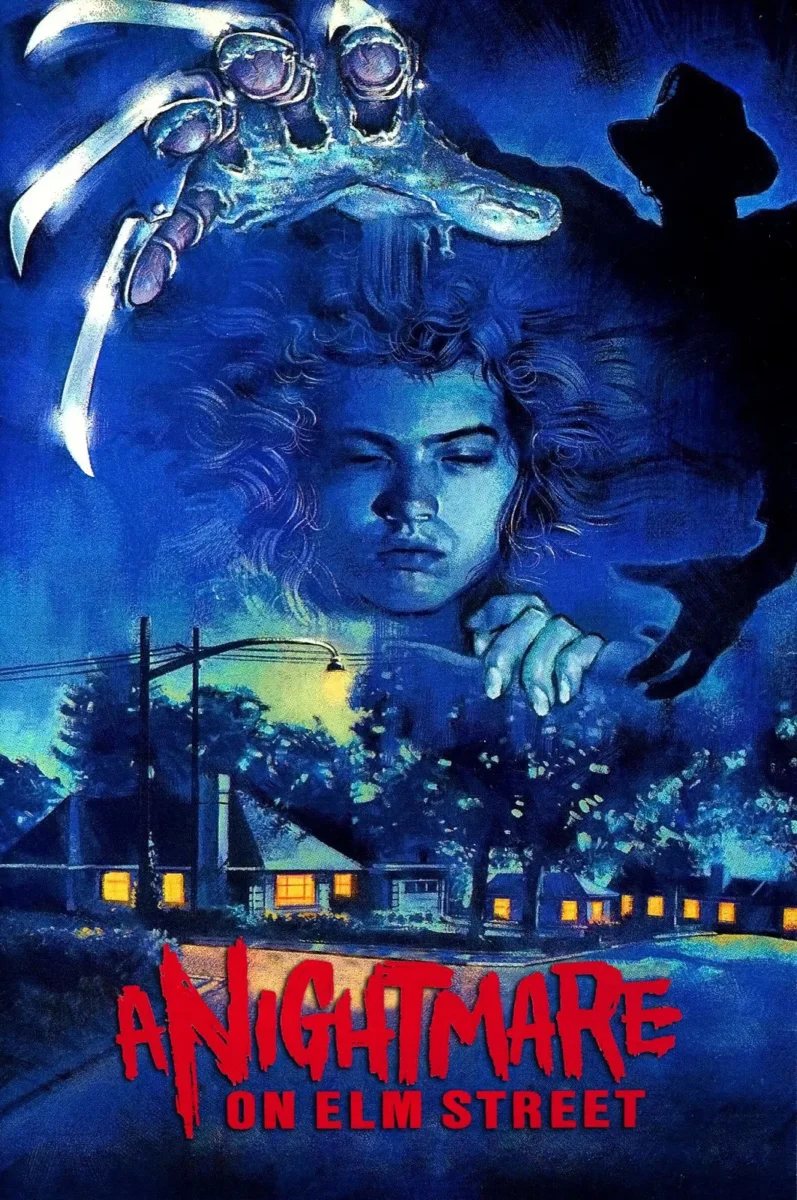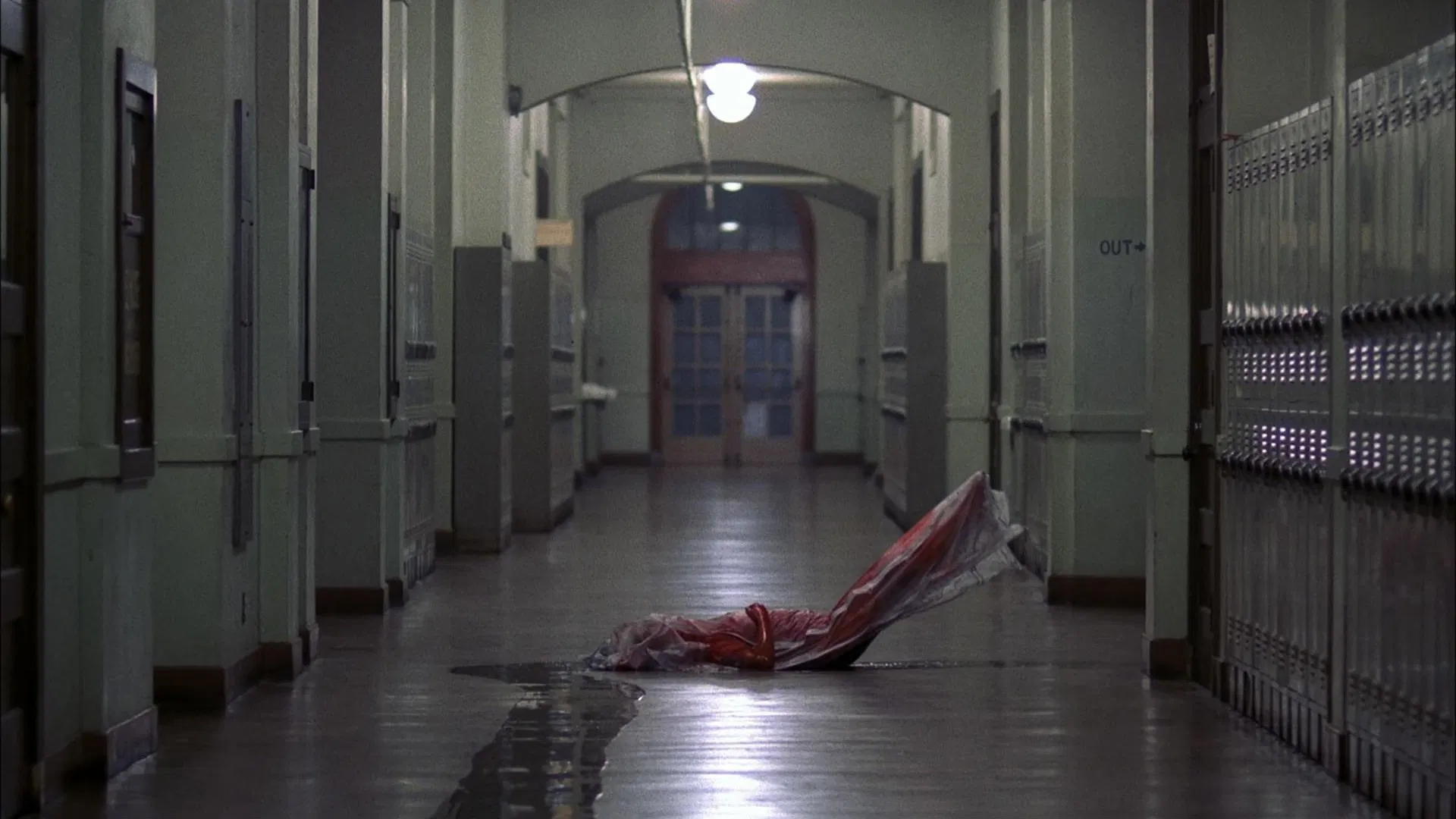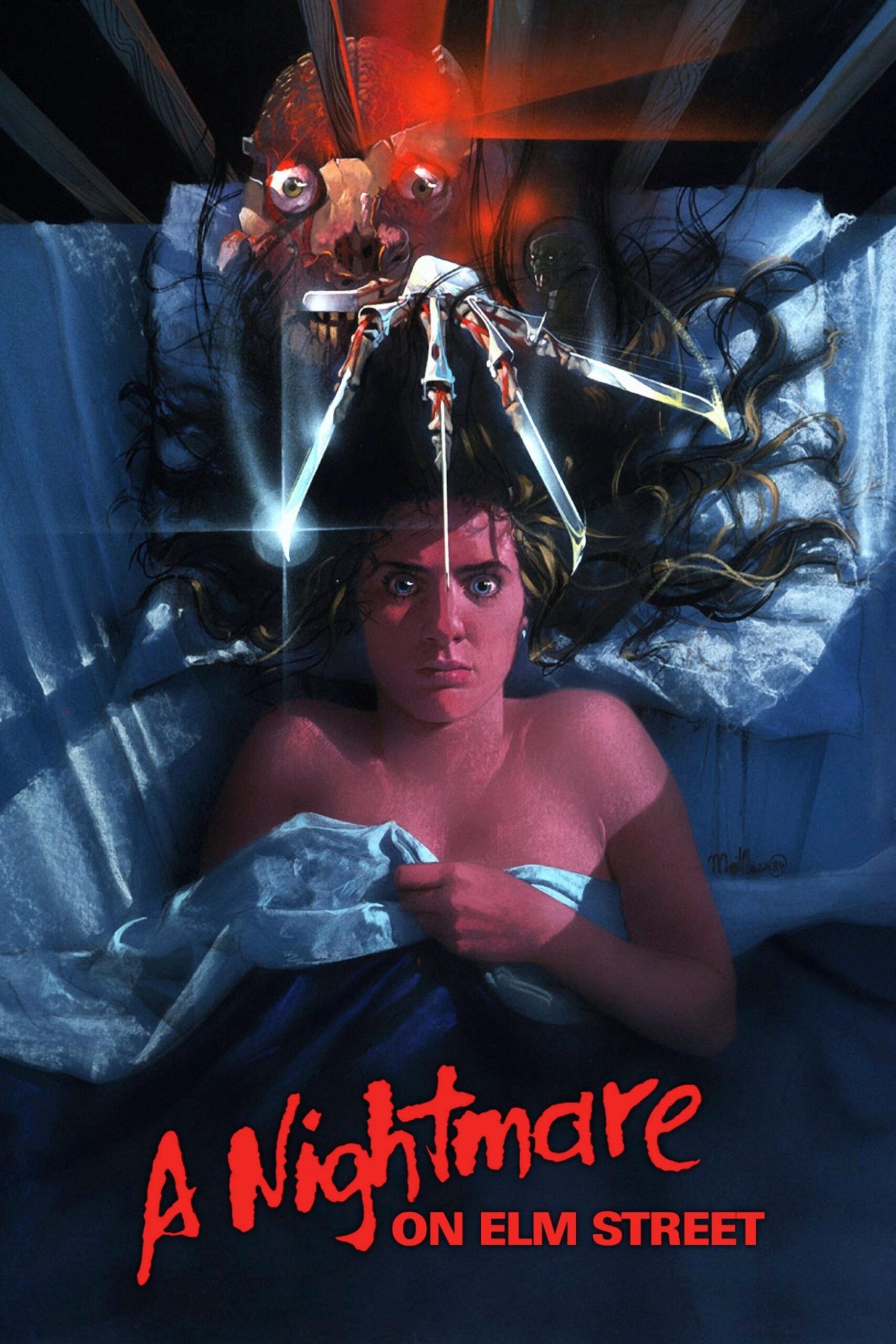
I wasn’t even alive when A Nightmare on Elm Street first slashed its way into cinemas—I wouldn’t be for another two years. But, like any self-respecting kid who ignored the VHS warnings, I eventually found it. Around eight or nine years old, armed with a stolen late-night slot and zero sense of self-preservation, I hit play. What followed scarred my childhood in the most delightfully horrifying way imaginable. The body bag in the school hallway? Yeah, that scene haunted me for years. Anytime i’d see a hall like that in another movie, horror or not, it twigs the memory!
It’s funny how trauma becomes nostalgia when the lighting’s right. Because now, decades later, I love this film—warts, knives, and all. Craven’s 1984 masterpiece isn’t just a movie; it’s a sleep-deprivation campaign dressed as cinema. And for all its camp edges and surreal flourishes, it manages to remain terrifyingly alive.
Robert Englund’s Freddy Krueger isn’t merely a villain—he’s a performance, a personality, a twisted showman that reshaped the rules of horror. He doesn’t just kill; he performs murder. That sing-song menace and that laugh—half carnival barker, half death rattle—cemented him as a pop-culture icon. There’s a reason that on Halloween 2025, Englund earned his long-overdue Hollywood Star. It wasn’t just for the kills, but for creating something that transcended the screen. Freddy became fear’s mascot, and for a generation raised on neon, VHS static, and suburban dread, he was the boogeyman.
Then there’s that wall scene—the one where Freddy’s face stretches through the elastic wallpaper above Nancy’s bed. Even now, decades later, it’s pure nightmare poetry. A haunting, tactile piece of practical effects wizardry that puts the CG-heavy remake to absolute shame. The way the wall ripples as if reality itself is breathing? Spine-tingling. Sometimes less really is more, and the original’s lo-fi ingenuity beats a million pixels of digital gloss any day.
It’s easy to forget just how young and raw Johnny Depp was here. This was his film debut, and you can feel the eager energy of a soon-to-be superstar giving it everything he’s got. His demise—one of horror’s most infamous—is a gruesome art installation of geysering blood and 80s excess. Depp sells it with that sweet, sleepy charm of a kid who thought he’d just landed a cool little role in a slasher flick, not a ticket into cinematic immortality.
Heather Langenkamp as Nancy anchors it all beautifully. She’s not your typical scream queen—she’s resourceful, clever, and doesn’t wait for anyone else to save her. Watching her turn household tools into anti-dream warfare is still oddly inspiring. You can almost feel Craven using Nancy as a mouthpiece for all the clever girls who grew up surrounded by Freddy posters and thought, “I’d have done better.” Well, Nancy did.
That’s the thing about A Nightmare on Elm Street: it dances on the line between fantasy and fear so nimbly that it almost feels mythic. It’s as much about adolescence and anxiety as it is about murder. Craven understood that horror works best when it slips under the skin of reality—when it blurs the waking and the dreaming until you can’t tell which one’s safer. The suburban setting, with its perfect lawns and plastic smiles, only sharpens the blade.
Sure, it’s got its campy edges. Freddy’s humour—later milked dry in the sequels—is already peeking through here. Some of the dialogue teeters on melodrama, and there’s a faint whiff of teen soap beneath the blood. But that’s part of its charm. It’s a snapshot of 80s horror before irony took over—earnest, experimental, and bloody inventive.
It’s strange watching it now, knowing what came after. How Freddy became a quip-spouting celebrity monster, how the series twisted itself into meta madness and back again. Yet, this first film still holds something sacred—a purity of terror. There’s a quiet menace to the way Craven shot shadows, to how the dream logic makes every frame slightly off-kilter. It feels less like a film and more like falling asleep in a fever.
Looking back, A Nightmare on Elm Street carved out more than just a franchise—it carved out a fandom that refuses to rest. Its DNA runs through every horror that dares to invade the safe spaces of everyday life. Englund’s glove, that nursery rhyme, the red-and-green sweater—they’re horror hieroglyphs now. And to think, once upon a time, it was just a low-budget experiment about nightmares killing kids.
I can laugh about it now. The school scene no longer haunts me, though every time I see a fog-filled corridor (which strangely isn’t very often!), I get a little nostalgic chill. Freddy may not keep me awake anymore, but he still visits in the best kind of dreams—the cinematic ones.
Because some nightmares you never really outgrow. You just learn to enjoy the ride.