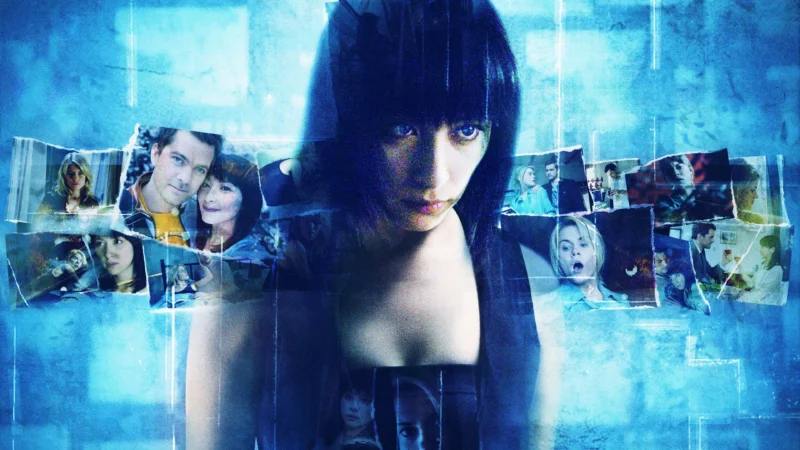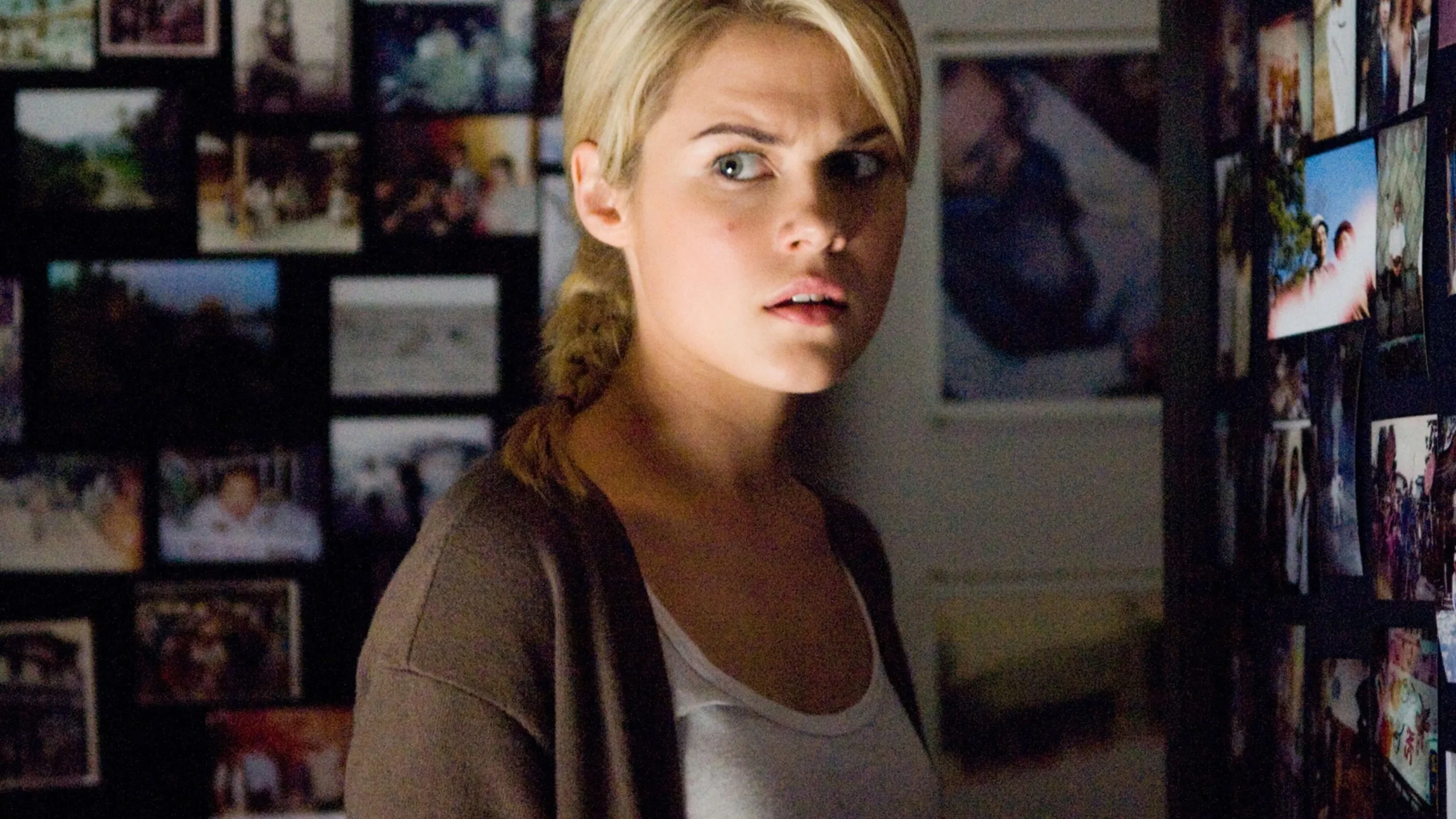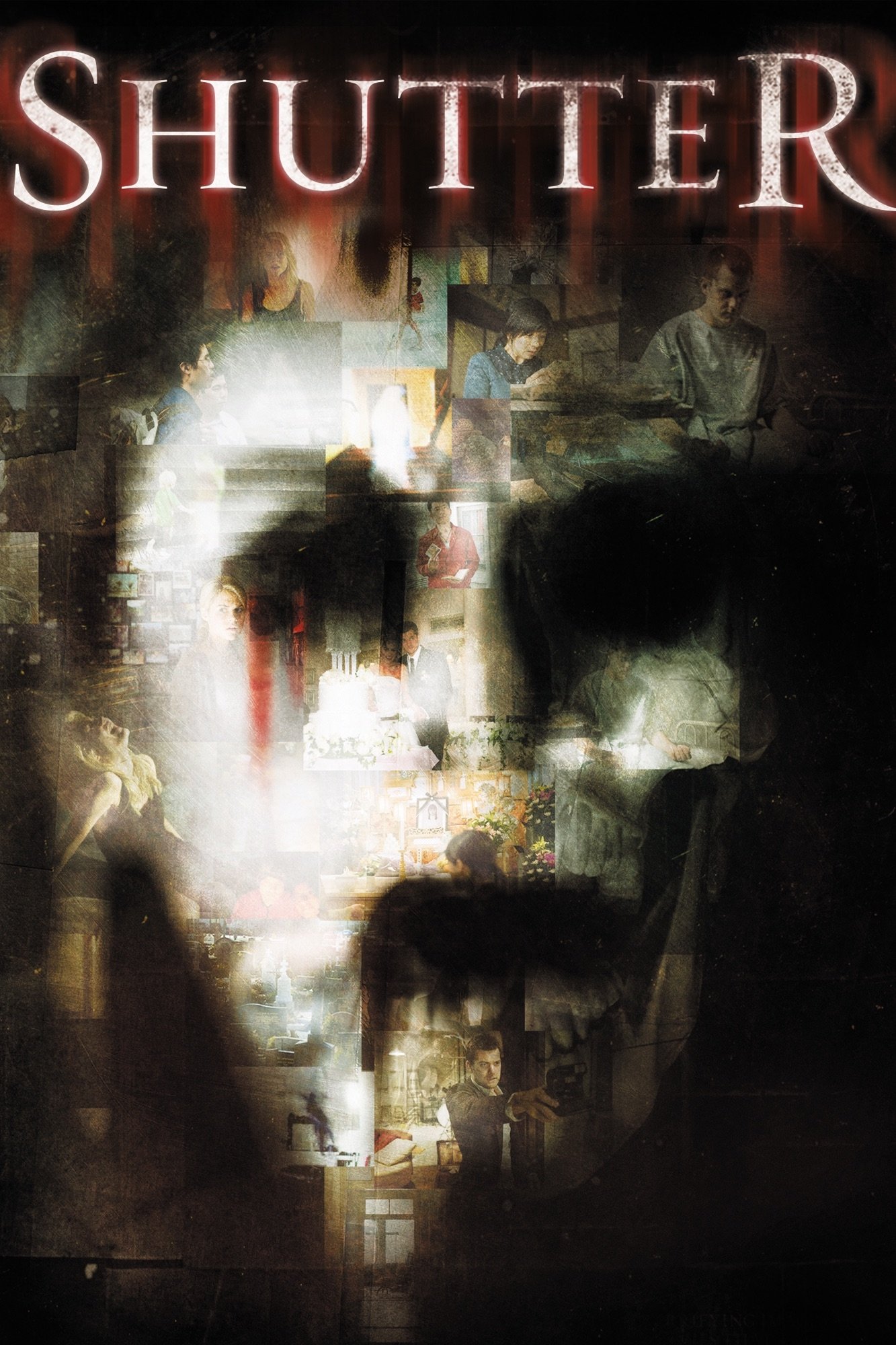
Every now and again, a film arrives that feels like the product of a cultural photocopy—grainy, slightly off, but just familiar enough to tug on the original’s sleeve. Shutter (2008) is exactly that: an American remake of the 2004 Thai horror of the same name, released during that golden age when Hollywood was scooping up Asian ghost stories faster than you could say “pale woman with long hair.” You can almost smell the early-2000s fear of technology wafting from the screen. Cameras, flashes, ghostly afterimages—it’s all here, wrapped in a faint mist of déjà vu.
Joshua Jackson, still carrying a whiff of Dawson’s Creek boyishness, plays Ben, a photographer honeymooning in Japan with his new wife Jane (Rachael Taylor). The two are barely out of wedding mode when their joyride down a foggy country road takes a sharp, spectral turn. They hit something—or someone—but when they check the road, it’s empty. Naturally, being a horror film, that’s not the end of it. Soon, Ben’s photographs start developing some extra features. Not in the way Lightroom might like, but in the way that makes you mutter, “Don’t look behind you.”
What follows is a familiar but well-constructed ghost story. There’s mystery, guilt, and the inevitable uncovering of dark secrets through increasingly uncomfortable encounters. Jane begins to suspect that something supernatural has attached itself to them, while Ben plays the sceptic until it’s far too late (as it always is). The film balances traditional ghost tale beats with moments of striking unease—the kind of creeping dread that doesn’t rely on cheap shocks, even if a few do slip through the editing suite.
Where Shutter struggles is pacing. The first act is tight, efficient, and atmospheric—a promising start that builds intrigue. But somewhere around the second act, things sag like a damp roll of film. The plot slows under the weight of its own repetition, the scares lose rhythm, and the mystery begins to feel stretched thin. It’s not bad writing, per se; the story itself is actually well-shaped. It’s more that the editing and pacing never quite let the tension breathe in the way a ghost story like this needs to. You find yourself wanting the film to either pick up or quiet down, but instead, it lingers awkwardly in the middle, flickering between suspense and sleepiness.
That said, the Onryō arc—Japan’s archetypal vengeful spirit myth—lands surprisingly well here. Megumi, played with understated menace by Megumi Okina, is both terrifying and tragically sympathetic. She’s not a monster; she’s grief and betrayal made flesh. When her story begins to unfold, we’re reminded why Asian horror struck such a nerve to begin with—it wasn’t just about scares, it was about sorrow. The Onryō doesn’t haunt because she’s evil; she haunts because no one listened.
Megumi’s portrayal gives the film its heart (or perhaps, its haunted heart). There’s an eerie beauty in how she drifts through the scenes—her presence cold yet mournful, her story twisting from horror to heartache. By the time we learn what really happened between her and Ben—SPOILER: his sleazy betrayal and cruel complicity in her trauma—it becomes clear that the true horror here isn’t supernatural at all. It’s human cowardice. Her revenge feels earned, and strangely, by the end, you might just find yourself rooting for her.
Joshua Jackson’s final moments are some of the most harrowing of his career. Without spoiling the full sequence (SPOILER: though we can say his “possession” reveal and the haunting epilogue photo are nightmare fuel for anyone who’s ever had neck pain), it’s one of those endings that lingers long after the credits. There’s a pitiful sadness to Ben’s fate, an image that captures both punishment and penance. It might not be the twist of the century, but it’s undeniably effective. You don’t get catharsis—you get a shiver that stays with you.
And then there’s David Denman. Yes, Roy from The Office. Only this time, he’s not stacking paper at Dunder Mifflin—he’s stacking bodies in a Tokyo skyscraper. His character, Adam, is part of Ben’s old photography crew, and like Ben, he’s got a few skeletons (and maybe one vengeful spirit) lurking in his negatives. Denman does a solid job transitioning from comedic familiarity to uneasy corporate dread. His role doesn’t last long—SPOILER: Megumi doesn’t exactly send flowers—but his demise is one of those satisfying horror comeuppances that make you smirk. “That’s what you get for covering up spectral assault, Roy.”
Visually, Shutter works in the way most mid-2000s horrors did. It’s dark, moody, occasionally blue-tinted, and full of mirrors you’d rather not look into. Masayuki Ochiai—who knows his way around supernatural cinema—keeps the camera steady and the tone appropriately restrained. He resists the temptation to go full CGI ghost-fest, relying instead on small, unsettling details: a shadow that doesn’t move, a blurred figure in a photo, the slow flicker of a light bulb. It’s familiar territory, but at least it’s competently mapped.
Rachael Taylor provides the film’s emotional grounding as Jane. She’s the outsider navigating both a foreign culture and an increasingly fractured marriage, and while the script doesn’t give her much depth, she does a fine job of holding the human thread together. Her gradual shift from supportive spouse to terrified investigator feels believable, and her final scenes carry a quiet strength that contrasts nicely with Jackson’s moral unraveling.
Thematically, Shutter taps into that universal guilt that powered so many J-horror imports—sins that can’t be buried, secrets that won’t stay hidden, and the idea that technology, no matter how advanced, can’t escape the supernatural. It’s a solid concept, and the film hits most of the right beats, but it never quite transcends its genre. Where The Ring and The Grudge found ways to reframe grief and obsession through uniquely American lenses, Shutter feels more like a faithful photocopy—fine to look at, but lacking that extra layer of texture.
Still, for all its shortcomings, Shutter has a certain nostalgic charm. It’s a time capsule of an era when horror was experimenting with ghosts in translation—when Japan’s rich folklore was being filtered through the Hollywood machine. It may not hold the same staying power as its predecessors, but as an atmospheric, occasionally emotional ghost story, it earns its keep.
By the time the final frame clicks into place, we’re left with an image that sums it all up: haunting, imperfect, but oddly poignant. Shutter might not develop into a masterpiece, but it’s a respectable print from a well-worn roll. Perfect for a Halloween night when you want something spooky without needing to sleep with the lights on.
Planet of the Capes Rating: 6/10 — Not a record setter, but an easy Halloween season watch.