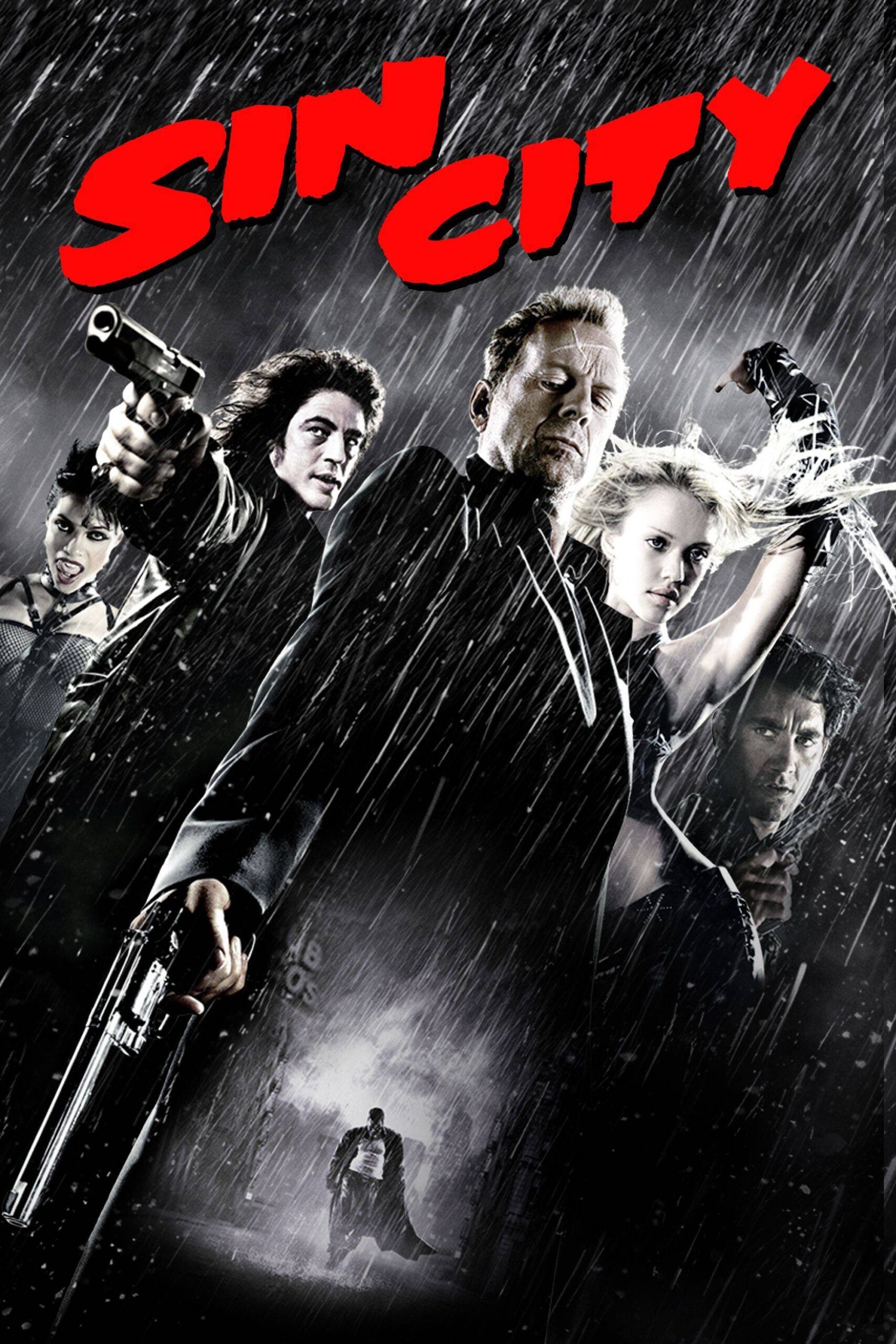
Sin City (2005) is one of those films that instantly divides its audience—you either fall in love with its grim aesthetic and pulpy storytelling, or you check out within the first ten minutes wondering why everyone looks like they’ve wandered out of a moving comic strip. For those who stay strapped in, Basin City is revealed in all its miserable, seedy glory, a patchwork of vice and vengeance where corruption has infected every dark corner. It’s not one story, but three separate tales of broken people chasing scraps of justice, each one narrated in gravelly tones that could sand down a coffee table.
The pedigree behind the film is enough to raise eyebrows. Frank Miller, already legendary for penning 300 and The Dark Knight Returns, joined forces with Robert Rodriguez, the mind behind Desperado, From Dusk Till Dawn, and Machete. It’s a collaboration that feels almost too perfect—Miller brings the nihilistic worldview and sharp dialogue, while Rodriguez injects the kinetic filmmaking and anarchic energy. And yes, Quentin Tarantino drops by for a guest directing spot just to sprinkle on some of that Tarantino seasoning. It’s the definition of style meeting substance, although whether that substance is rich storytelling or just a lot of well-choreographed carnage is up for debate.
What really slaps you in the face with this movie, though, is the cast. It’s not often you see this many heavy hitters crammed into one film, all given their little corner of the sandbox to play in. Bruce Willis lends his weary gravitas to a cop drowning in morality plays. Mickey Rourke is at his bruising, unhinged best, all gritted teeth and unstoppable fists. Clive Owen smooth-talks his way through his storyline with a mix of menace and charm, while Jessica Alba plays the light in the darkness—even if the script makes sure her light doesn’t shine too clean. Then you’ve got Benicio del Toro, Brittany Murphy, Elijah Wood in a role that might make you forget hobbits forever, Rosario Dawson commanding the screen, Jaime King, Rutger Hauer, Carla Gugino, Michael Madsen, and Nick Stahl. It’s a line-up that would make even the Avengers look twice. If there were Oscars for casting, this one should’ve at least been in the running.
The film’s visual style is its real calling card. Everything is shot in a stark black-and-white that pays homage to the hard-boiled noir classics, but with a modern twist—splashes of vivid red, piercing yellow, and the occasional searing blue cutting through the monochrome like neon signs on a rain-soaked street. It’s not subtle, but subtlety was never on the menu. The whole thing looks like a graphic novel come to life, every frame drenched in shadow and menace. Love it or hate it, you can’t say it doesn’t commit to its look.
When it comes to action, Sin City doesn’t hold back. This isn’t your sleek, choreographed Matrix-style bullet ballet. This is dirty, bone-crunching, pulp violence. Heads roll, limbs snap, bullets tear through the night, and the blood—when it’s allowed a colour at all—splashes like ink across the screen. It’s violent, yes, but there’s a strange artistry to it, like watching a brutal painting come alive. Still, it’s not for everyone. Some viewers will admire the commitment to extremity; others will be repulsed and tap out early.
One of the film’s more daring moves is letting each lead character narrate their own story. It gives the movie that grim, confessional tone you’d expect from a smoky detective novel. Sure, the monologues occasionally drift into parody, but for the most part they fit the heightened pulp atmosphere. They help anchor the audience in each grim fable, even when the plots themselves veer into the unbelievable. This isn’t about realism; it’s about larger-than-life archetypes crashing into each other in a city where morality died a long time ago.
For all its style and intensity, Sin City isn’t flawless. Its segmented narrative means some stories will grip you harder than others, and pacing does become an issue when one tale outshines the rest. The relentless bleakness can also be exhausting—it’s a film drenched in misery and blood, and there’s little respite. At times it feels like Miller and Rodriguez are so in love with the style that they forget to keep the heart beating underneath.
That being said, if you’re willing to embrace its darkness, there’s a lot to admire here. It’s a film that knew exactly what it wanted to be and never flinched. Gritty, moody, and unapologetically violent, Sin City carved itself a place in the mid-2000s film landscape as one of the boldest experiments in comic book adaptation. It’s messy, it’s indulgent, but it’s undeniably memorable.
Sin City earns a 6/10. A flawed but fascinating trip through a graphic novel nightmare, one that proves sometimes the shadows are more interesting than the light. – Alex