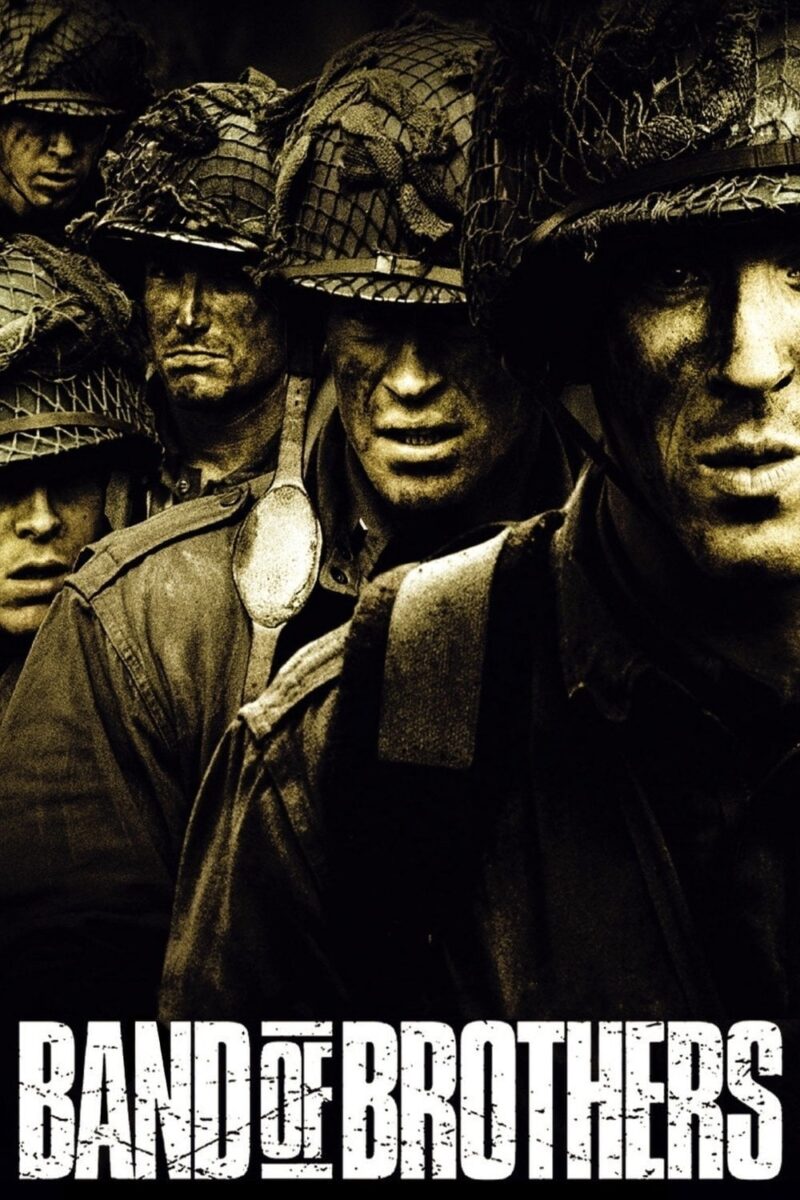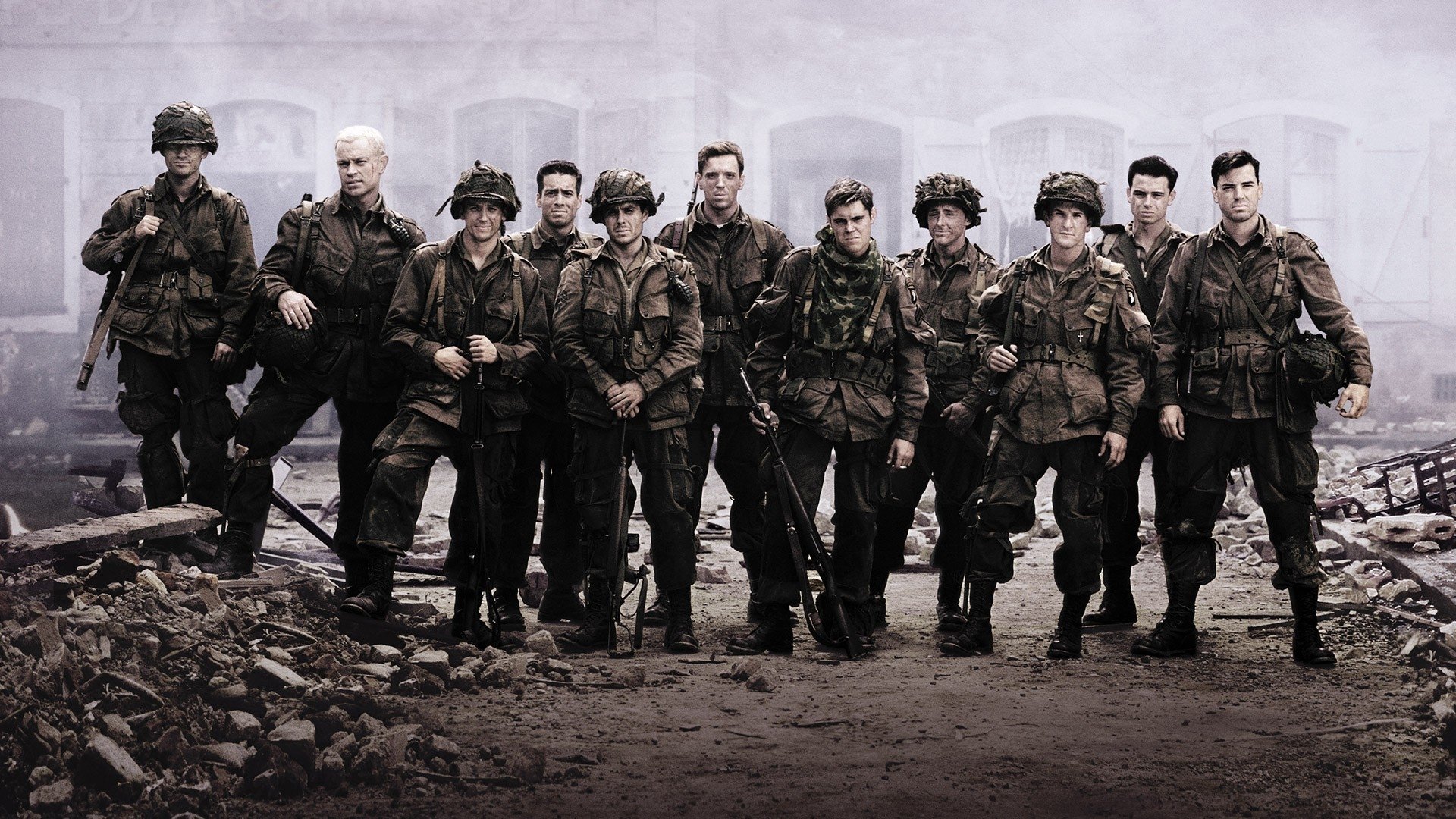
There’s television… and then there’s Band of Brothers—the kind of landmark TV that grabs you by the dog tags and drags you through the mud, blood, and brotherhood of World War II. Based on the real-life exploits of Easy Company, 506th Regiment of the 101st Airborne Division, the series launches us out of a plane on D-Day and doesn’t let go until the bitter end in the Bavarian Alps. It’s ten episodes of meticulous, visceral storytelling that feels so real, you’ll swear you can smell the cordite and wet socks.
Helmed by Tom Hanks and Steven Spielberg off the back of Saving Private Ryan, the show had some serious firepower behind the scenes—and it shows. From the cinematography that bathes Normandy in steel grey dread to the sound design that practically gives your living room PTSD, this is a production that sets the gold standard for war storytelling. The budget was HBO’s most expensive at the time, and you can feel every dollar of it on screen. No detail is spared—right down to the stitching on the uniforms and the mud-caked boots that look like they’ve genuinely marched through Europe.
The cast is vast but never bloated. Damian Lewis gives a career-making turn as the stoic, dependable Major Richard Winters—equal parts calming presence and strategic genius. Ron Livingston’s Nixon is the perfect foil, a man who drinks his way through trauma but never lets go of his humanity. And then there’s David Schwimmer as Captain Sobel, the pre-war drill instructor whose obsessive control and lack of combat savvy make him one of the most fascinating contrasts in the entire show. It’s a performance so different from his Friends days that you half expect Ross to storm a foxhole screaming about sandwiches.
A rotating ensemble of young actors—many of whom went on to become household names—adds to the authenticity. From Michael Fassbender and James McAvoy in blink-and-you’ll-miss-them roles to Donnie Wahlberg, Scott Grimes, and Neal McDonough delivering grounded, emotional performances, there isn’t a weak link in the company. It’s ensemble acting at its finest—no showboating, no vanity, just raw, unfiltered portrayal of the psychological toll of combat.
But what truly elevates Band of Brothers is its emotional gravity. It’s not just the shootouts and strategy—it’s the quiet moments, the moral reckonings, and the unbearable cost of war. The show doesn’t flinch away from the trauma: shellshock, frostbite, death, cowardice, heroism—it’s all in there, layered and haunting. Episode 9 (“Why We Fight”) is a particular gut-wrencher that peels back the horror of the Holocaust with devastating impact, all the more powerful because it’s told from the soldiers’ stunned, wordless perspective.
Each episode begins with short video interviews from the real Easy Company veterans, their weathered faces speaking plainly about bravery, loss, and camaraderie. You don’t learn their names until the final episode, and when you do… well, let’s just say it hits hard. It’s a sobering reminder that these weren’t superheroes—they were just young men, often scared, often unsure, but always moving forward.
The legacy of Band of Brothers is undeniable. It inspired a generation to understand WWII beyond textbooks, and it gave a voice to veterans who’d lived quietly with their memories for decades. It’s often imitated (The Pacific, Masters of the Air), but never equalled in its perfect blend of cinematic scale and personal intimacy.
It’s not quite flawless—some of the lesser-known characters can blur together, and a few episodes wander into slower pacing—but these are nitpicks in a series that changed the landscape of TV storytelling. If you’ve somehow missed this essential piece of television, rectify that immediately. And if you’ve seen it before? Watch it again. You’ll feel the weight of it more each time.
Verdict: Band of Brothers is a thunderous salute to courage, camaraderie, and sacrifice. It walks the line between drama and documentary with expert balance and earns every tear, every cheer, and every moment of reflection.
9/10 – “Currahee!” never sounded so powerful.