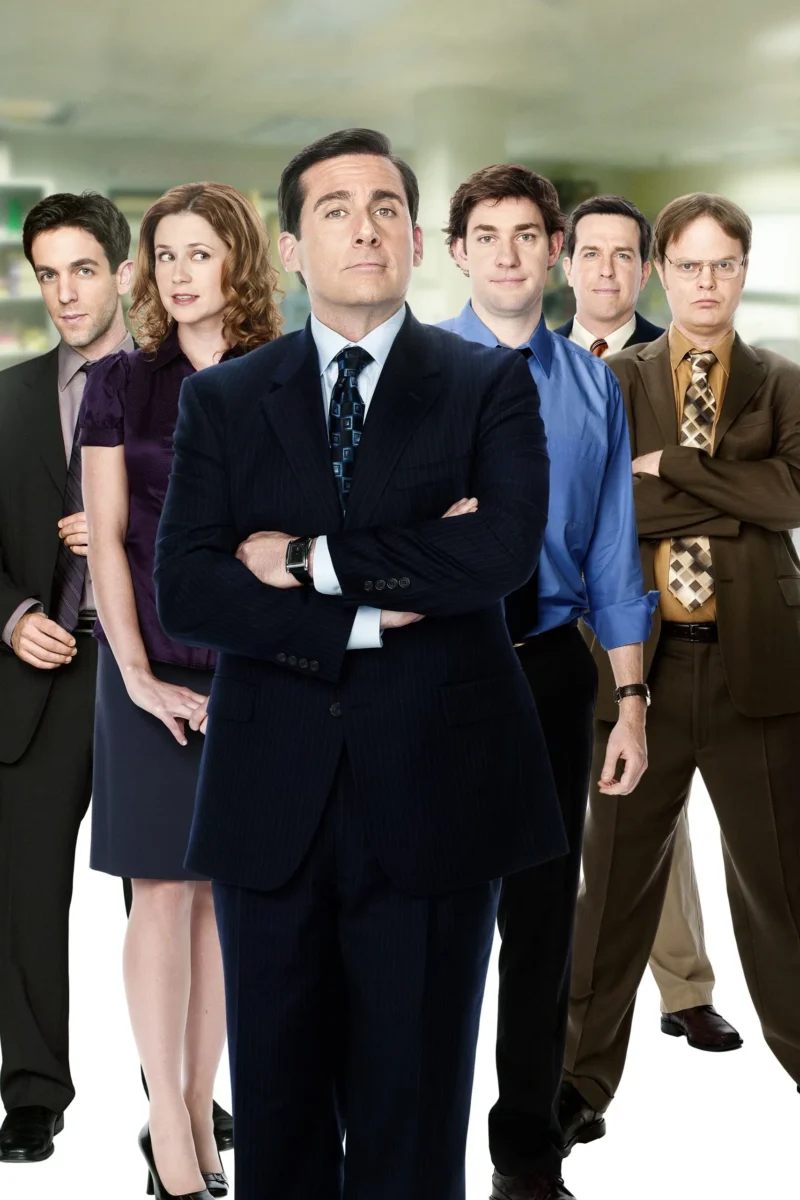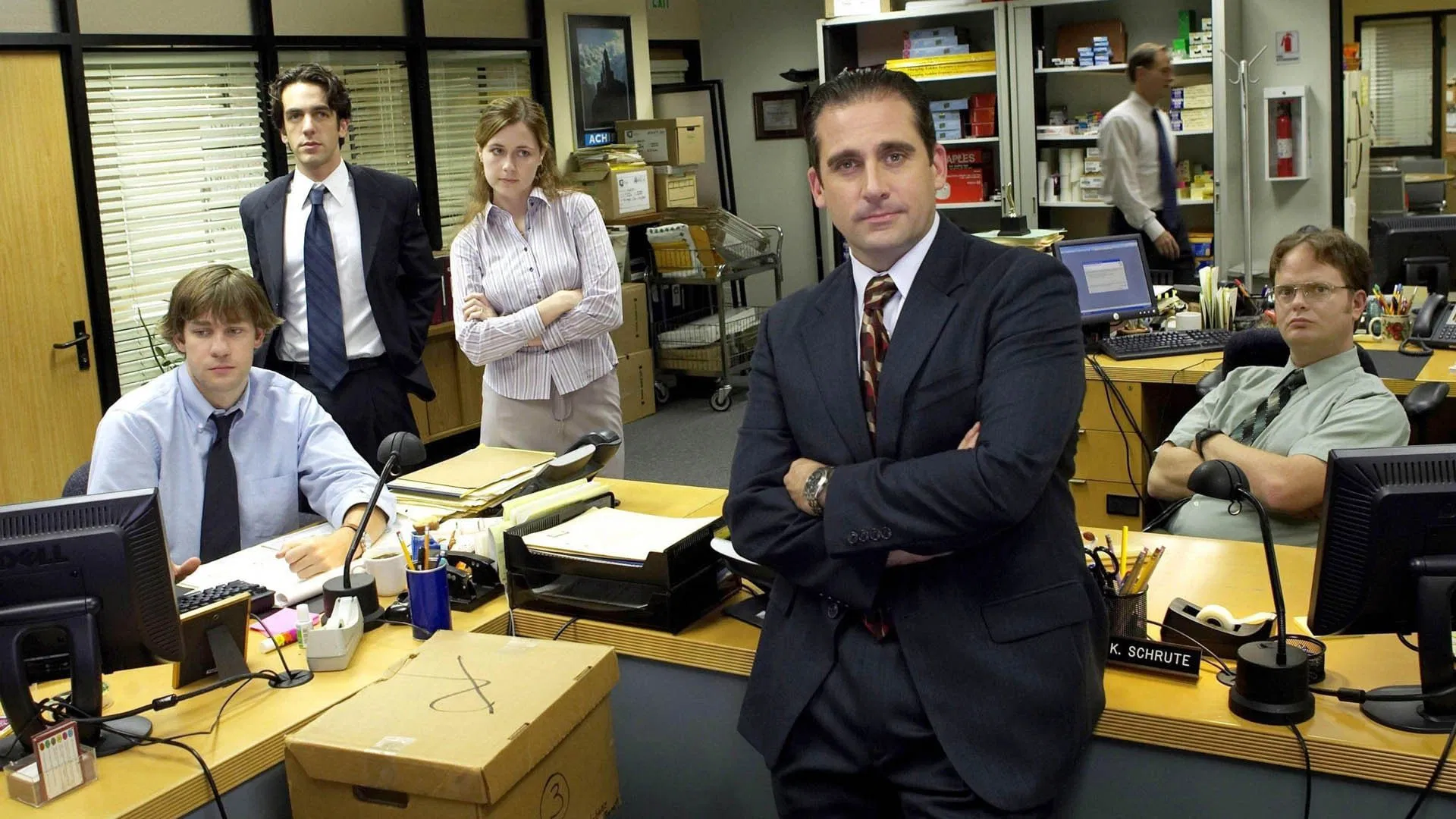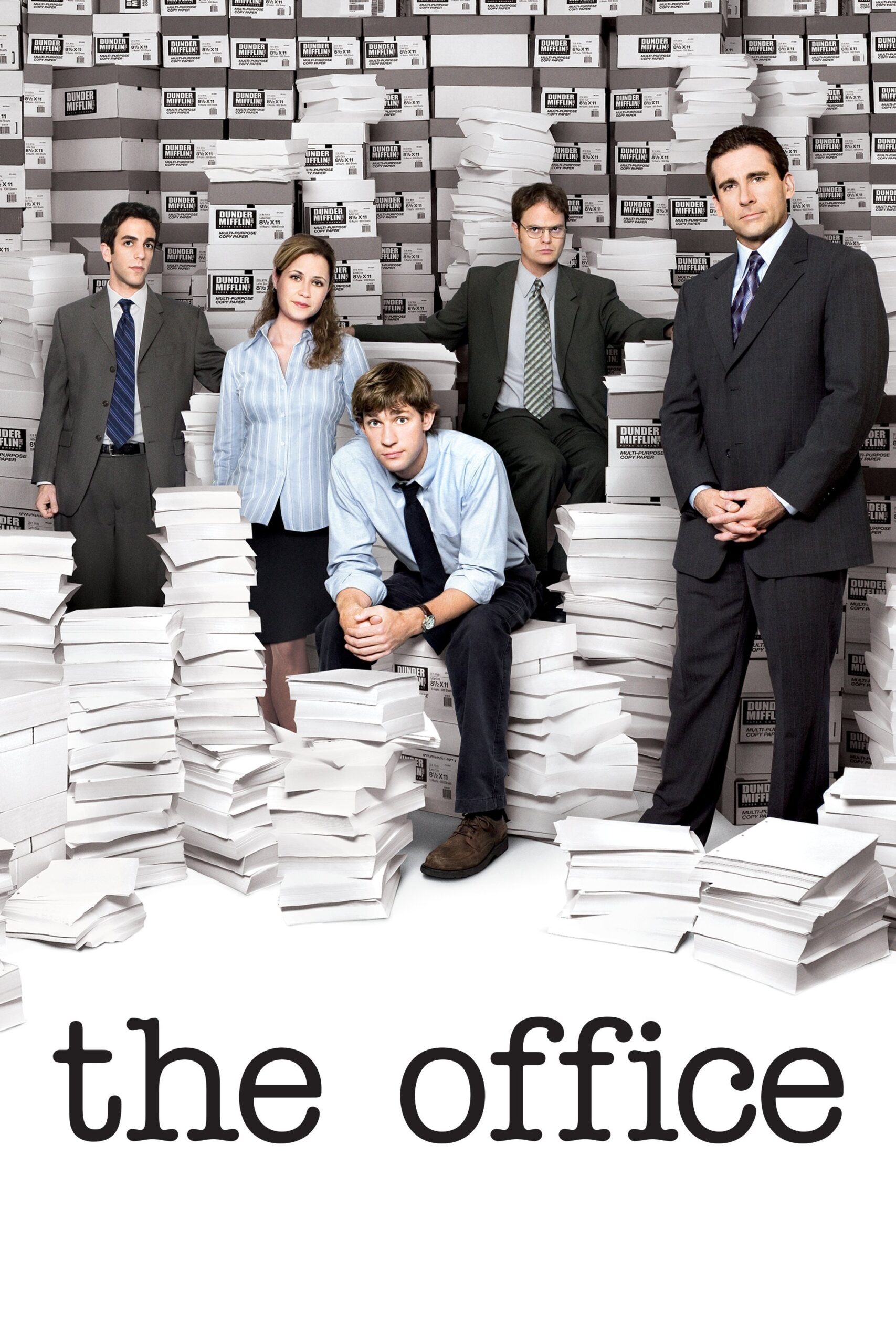
There are few American remakes of British comedies that even remotely justify their existence, but The Office (US) didn’t just justify it—it completely redefined it. What began as an experiment to localise the deadpan awkwardness of Slough into the fluorescent glow of Scranton, Pennsylvania, somehow evolved into one of television’s greatest workplace sagas. It’s as if Ricky Gervais and Stephen Merchant planted a seed that Greg Daniels nurtured with caffeine, chaos, and copier paper until it bloomed into a cultural institution.
Steve Carell’s Michael Scott is the gravitational centre of this paper-pushing universe. What’s fascinating is that his version of the boss isn’t simply a carbon copy of David Brent. He starts that way, of course—cringeworthy, clueless, and desperate for validation—but over time, Carell injects him with warmth, empathy, and an unrelenting hope that he is a good boss. He isn’t, of course. But he tries so hard that you can’t help but love him for it. It’s rare for a character so monumentally awkward to be equally endearing, yet Carell’s performance manages to bridge that impossible gap with comedic genius and heartbreaking sincerity.
Then there’s Rainn Wilson, whose Dwight Schrute has earned his place in the pantheon of sitcom legends—up there with Joey Tribbiani, Ron Swanson, and even Basil Fawlty. He’s a martial arts-obsessed beet farmer, assistant (to the) regional manager, and self-styled survivalist who turns every meeting into a tactical simulation. Wilson’s portrayal balances terrifying intensity with utter cluelessness, crafting a character who’s so ridiculous he loops back around to brilliance. The show might be called The Office, but Dwight makes it his dojo.
John Krasinski, the smirking everyman, perfected the art of the fourth-wall glance. His Jim Halpert is the audience’s spirit animal—forever stuck between laughter and disbelief at the chaos unfolding around him. And opposite him, Jenna Fischer’s Pam brings quiet warmth and authenticity, grounding the absurdity with real emotional stakes. Their chemistry feels effortless, as if the entire show might collapse if they didn’t share a knowing glance now and again across the Dunder Mifflin bullpen.
And then—there’s Creed Bratton. The underdog, the enigma, the absolute wildcard. Creed operates on a frequency known only to Creed. Every line he delivers sounds improvised by a man who’s wandered onto set by accident and decided to make it work. Whether he’s claiming to have stolen a printer or referencing possible cult activity in his past, he embodies the kind of unpredictable energy that sitcoms rarely achieve. It’s like watching a cryptic crossword come to life.
The ensemble cast, though, is what turns The Office from a good show into a legendary one. B.J. Novak, Mindy Kaling, and Paul Lieberstein not only acted but also wrote and produced some of the best episodes. Ed Helms’ Andy Bernard, with his Cornell pride and a cappella warbling, brought both ego and insecurity in perfect measure. The quiet brilliance of Brian Baumgartner’s Kevin, the judgmental sass of Oscar Nuñez, Angela Kinsey’s uptight cat obsession, Phyllis Smith’s subtle motherly menace—all of it combines into a workplace that feels painfully, hilariously real. You could close your eyes and almost hear the hum of the photocopier and smell the stale birthday cake.
There are moments in television that transcend their own ridiculousness, and The Office is full of them. “Dinner Party,” for instance, remains a masterclass in discomfort. The plasma TV scene alone is worth an acting award. And then, of course, there’s Threat Level Midnight—Michael Scott’s magnum opus. SPOILER: The reveal that he’s been secretly producing his own action movie, starring his colleagues as unwilling extras, is peak Office absurdity. The fact that the writers went the extra mile and filmed the entire thing for the DVD extras is a glorious tribute to the show’s dedication to its own insanity. Watching Michael Scarn save the world from Goldenface might just be the best use of corporate time in history.
And then there’s Recyclops—Dwight’s ever-evolving eco-warrior persona, a recurring Earth Day tradition that slowly spirals into full-blown post-apocalyptic chaos over the years. It’s the perfect encapsulation of Dwight’s commitment to the bit and the show’s fearless absurdity. In real life, it’s become a favourite Halloween costume for fans everywhere, and rightly so. He isn’t the hero we need, but he is unquestionably the hero we deserve. Somewhere, deep down, we’re all just trying to be Recyclops.
As the seasons rolled on beyond Steve Carell’s departure, the show inevitably lost some of its magic. That’s not to say it fell apart—it still delivered strong moments and introduced new faces—but it never quite recaptured the lightning-in-a-bottle chemistry of those early and middle years. Carell’s absence left a paper-sized hole that even the formidable James Spader and Ed Helms couldn’t fully fill. But let’s talk about that formidable part—James Spader as Robert California.
Because here’s the thing: in our head-canon (and honestly, it fits far too well to ignore), Robert California is Raymond “Red” Reddington from The Blacklist. 100%. There’s no debate. It’s the same smooth-talking, manipulative genius—just lying low in Scranton for a while, testing his empire-building skills at Dunder Mifflin before going international. Think about it: the power plays, the cryptic monologues about seduction and control, the unnerving calm—it’s all Red. He needed those Sabre fax machines. They were step one in a global intelligence network built entirely from mid-2000s office tech and confused HR staff. Watching him saunter into the office with that quiet menace, you can practically hear the FBI in the background saying, “We’ve found him.” And we’re totally here for it.
Still, the series finale managed to close the book in true Office fashion: sentimental, self-aware, and satisfying. It reminded us that beneath all the cringe and chaos, this was always a story about people—ordinary, maddening, hilarious people.
The cameos sprinkled throughout, including a few visits from the original UK boss David Brent himself, were the perfect nods to the show’s roots. Gervais’ brief encounters with Carell’s Michael Scott felt like a surreal merging of worlds, two icons of awkwardness shaking hands across the Atlantic. It’s fan service done right—not intrusive, just enough to make you grin like Jim on camera three.
What makes The Office (US) timeless is its blend of absurdity and relatability. It captures the small victories and crushing mundanity of everyday work life, where a stapler in Jell-O can feel like a revolution. The humour—part cringe, part heart—never feels forced. It’s observational, character-driven, and occasionally so ridiculous it borders on art. Even the mockumentary format, which felt novel in 2005, has aged beautifully. Those talking-head interviews and documentary camera zooms have since become staples of modern comedy, but here, they were the gold standard.
Year after year, The Office remains the comfort food of television—a series you can drop into at any season, any episode, and instantly feel at home. The awkward silences, the over-the-top office parties, the petty rivalries—they all build into a rhythm that feels familiar, like your own workplace but with better punchlines.
So yes, this was an adaptation. But it wasn’t imitation—it was evolution. The Office (US) took the spirit of its British ancestor, dusted it with a little American optimism, and created something rare: a show that makes you laugh, cringe, and somehow care deeply about people who sell paper for a living.
A yearly binge? Absolutely. A cultural landmark? Without question. And as far as ports go—it’s not just one of the best ever made. It’s the gold standard.