Sometimes television pulls off the impossible: it takes something already canonised, already immortalised in cinema lore, and finds a way to retell it without collapsing under the weight of expectation. Bates Motel is exactly that. A modern reimagining and a prequel of sorts to Robert Bloch’s novel and Alfred Hitchcock’s 1960 masterpiece, the series takes the bones of a familiar horror story and fleshes them out into a five-season odyssey of obsession, control, and psychological unraveling. Loosely inspired by the Ed Gein murders that first fuelled Bloch’s imagination, Bates Motel manages to craft a suspenseful, character-driven drama that stands firmly on its own, despite walking in some very large, very bloody footsteps.
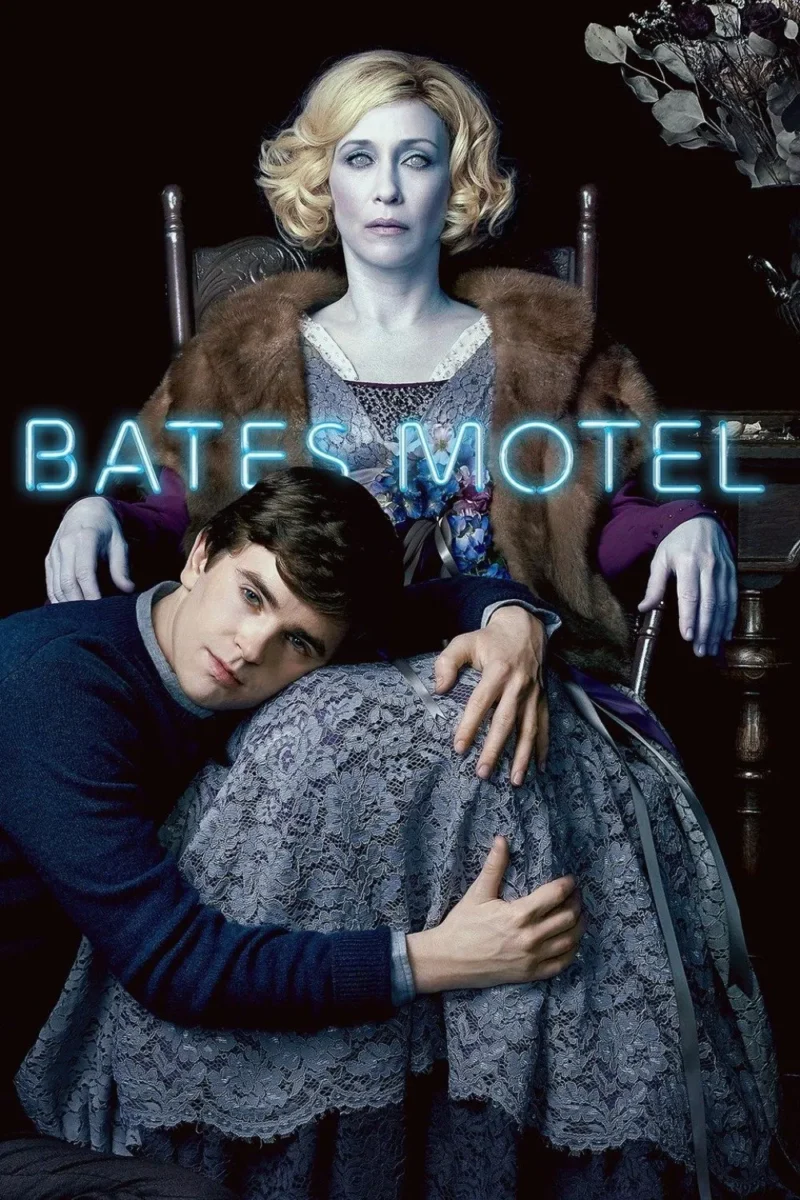
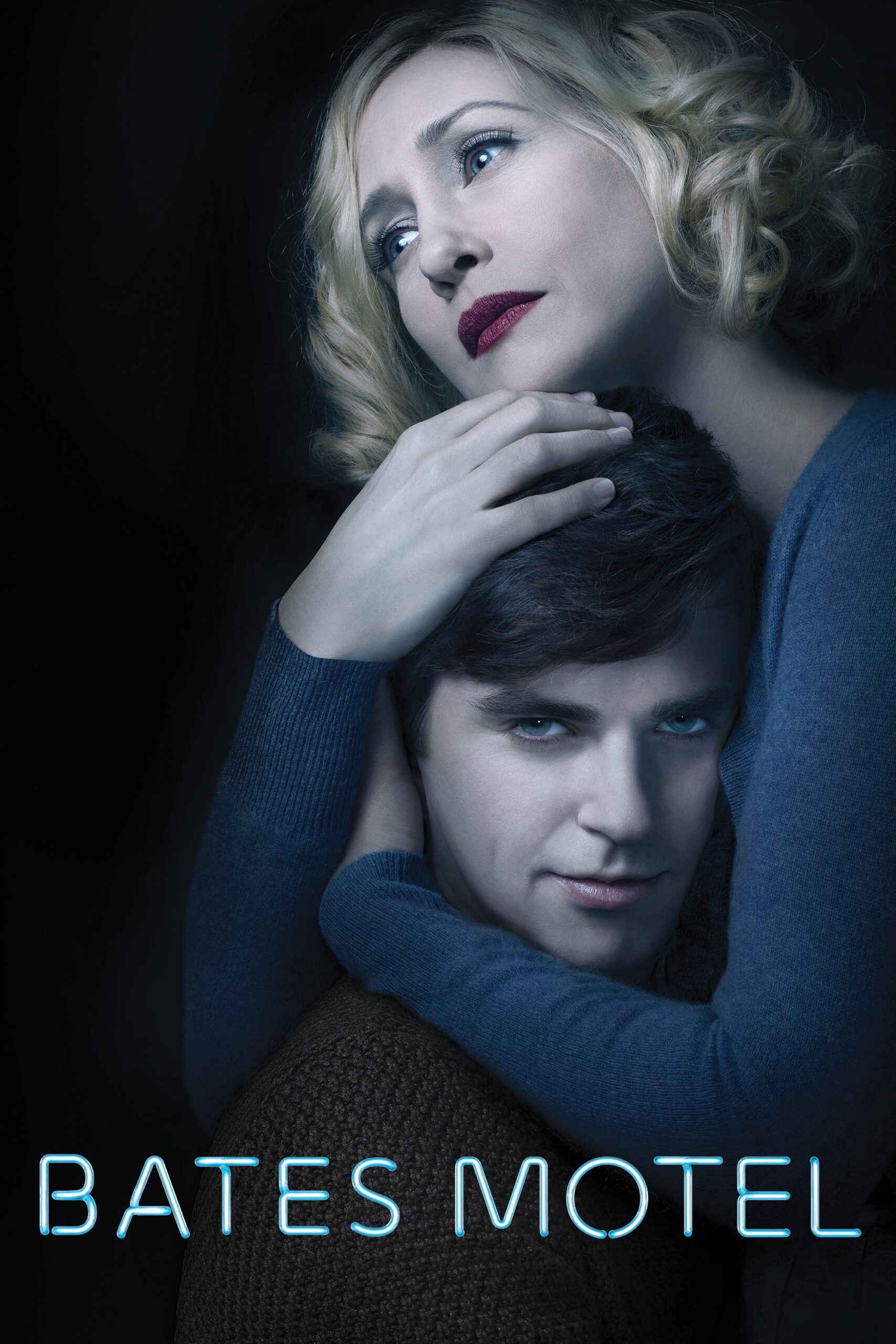
The genius here lies in recasting the familiar archetypes with modern sensibilities. Vera Farmiga delivers an electrifying turn as Norma Bates, a performance full of brittle vulnerability and ironclad manipulativeness, often in the same breath. She plays Norma not as a caricature of the domineering mother we know from Hitchcock, but as a woman who genuinely believes she’s doing the best for her fragile son. Farmiga manages to swing from warm maternal concern to sharp-tongued venom in seconds, embodying a character who is simultaneously tragic, terrifying, and, somehow, sympathetic. It’s this complexity that allows the show to sustain itself across sixty episodes.
Then there’s Freddie Highmore, whose Norman begins as a sweet, shy boy and slowly transforms into one of television’s most chilling figures. Watching his descent into madness isn’t a sharp drop; it’s a slow spiral, masterfully charted over five seasons. Highmore doesn’t lean into clichés. Instead, he portrays Norman’s fractures with unnerving subtlety—the nervous twitches, the fugue states, the unsettling way his eyes glaze when “Mother” takes over. By the time we arrive at the later seasons, Norman is fully submerged in his psychosis, and Highmore makes it both horrifying and heart-wrenching. SPOILER: the scenes in Pine View, where Norman begins to receive treatment, become some of the show’s most poignant. It’s here that you see glimmers of a young man desperately fighting for normality while something much darker bubbles beneath the surface.
The supporting cast is equally important in grounding the series and keeping the plot threads taut. Max Thieriot as Dylan brings a rugged, often reluctant humanity to the Bates family dynamic, offering a counterbalance to Norman’s fragility. Olivia Cooke as Emma serves as something of the audience’s conscience—a curious outsider who also functions as Mrs Exposition when needed, though to her credit she plays it with such sincerity that it never feels too clunky. Nestor Carbonell’s Sheriff Romero is a standout. A character not pulled directly from Bloch’s source material, Romero embodies the archetype of a small-town lawman compromised by circumstance. He makes choices that stray further and further from the law, yet his protective streak and eventual relationship with Norma lend him a heroism that never feels forced. His moral grey zone becomes one of the series’ most compelling threads.
And then there’s Caleb, played by Kenny Johnson, whose very presence twists the knife deeper into the Bates family dysfunction. His character veers constantly between sympathetic and repulsive, a deliberate move that keeps the audience unsettled. In many ways, Caleb becomes a mirror for Norman—both broken men, both warped by their upbringing, but with very different coping mechanisms. Finally, we have Ryan Hurst as Chick, whose mercurial, unpredictable nature makes him a fascinating wild card. Chick’s meta line about writing a novel that “might make a decent screenplay one day” is a wink to the audience that could have felt smug, but instead lands as inspired self-awareness.
The town itself becomes almost a character in its own right. Relocating the infamous motel and house to a new Pacific Northwest setting allows for atmospheric expansion and world building. While the focus remains firmly on the Bates family, the small-town backdrop is filled with crime, secrets, and corruption, painting a broader canvas than Hitchcock ever attempted. Still, one could argue that more time spent exploring the town beyond the central players would have been welcome, as the brief glimpses we do get are rich with possibility.
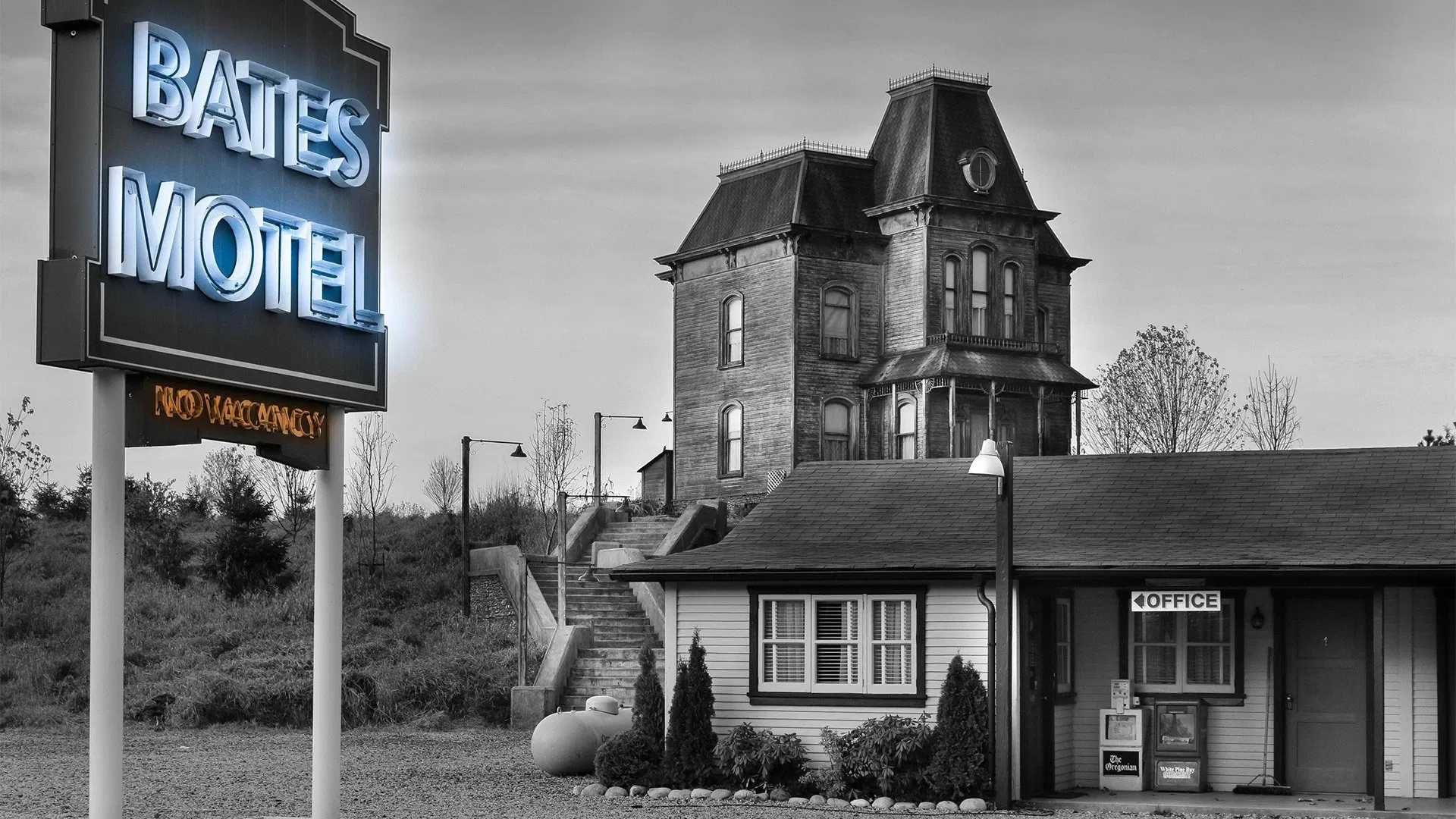
Let’s talk sets. The Bates house looms with Gothic menace, reconstructed lovingly to echo Hitchcock’s original without becoming a slavish copy. The house is every bit as much a psychological battleground as it is a physical location. Its creaking corridors and shadow-choked staircases embody Norman’s psyche, towering and decaying in equal measure. The motel, pristine and functional at first, gradually becomes a shrine to Norman’s madness as the series barrels towards its end. The set design deserves huge credit here—there’s a tactile authenticity that makes it all too easy to believe this nightmare world exists just off some quiet Oregon highway.
Comparisons to Hitchcock’s Psycho are inevitable, and Bates Motel earns its stripes by never trying to outdo the original. Instead, it enriches it. Where Hitchcock had two hours, the series has fifty, and it uses them to explore motivations, histories, and relationships in ways that cinema could not. SPOILER: Marion Crane’s infamous shower scene is retold here with a clever, subversive twist that both honours Hitchcock and sidesteps redundancy. Instead of feeling like a copy, it feels like a bold remix. By contrast, Gus Van Sant’s 1998 remake suffers by sticking too closely to Hitchcock’s blueprint. Shot-for-shot imitation might sound like reverence, but it drained the material of tension. Van Sant’s film is largely dismissed as pointless, though Vince Vaughn’s unsettling turn as Norman is arguably the only element worth salvaging. Bates Motel, thankfully, learns the right lessons and makes the old story feel new again.
As the seasons progress, the show tightens its grip until the final episodes, where everything converges. SPOILER: Norma’s death, staged with devastating inevitability, sets Norman on his final plunge. The endgame plays out with Shakespearean tragedy, culminating in a finale that manages to balance horror with genuine emotion. Watching Norman and Dylan’s final confrontation is gut-wrenching—this is a story that, despite all its knives, corpses, and madness, is ultimately about family and the terrible, inescapable bonds it creates.
Norman’s stint in Pine View provides a fascinating detour, a place where he briefly seems to find stability, even hope. The facility’s sterile walls serve as a jarring contrast to the looming house, and yet you sense that no amount of therapy could truly cure what ails him. It’s here the show teases the possibility of redemption before yanking it away in brutal, inevitable fashion.
In the end, Bates Motel earns its place not as a mere prequel but as a companion piece to one of the greatest horror films ever made. It expands, modernises, and deepens the mythos while respecting its roots. With top-tier performances—especially from Farmiga and Highmore—stunning production design, and fearless storytelling, it creates a world that feels familiar and brand new at the same time. Horror fans, drama lovers, and even sceptics who thought nothing could rival Hitchcock’s original may be surprised to find themselves engrossed in this family tragedy dressed up as a horror show. A very solid 8/10 from us!