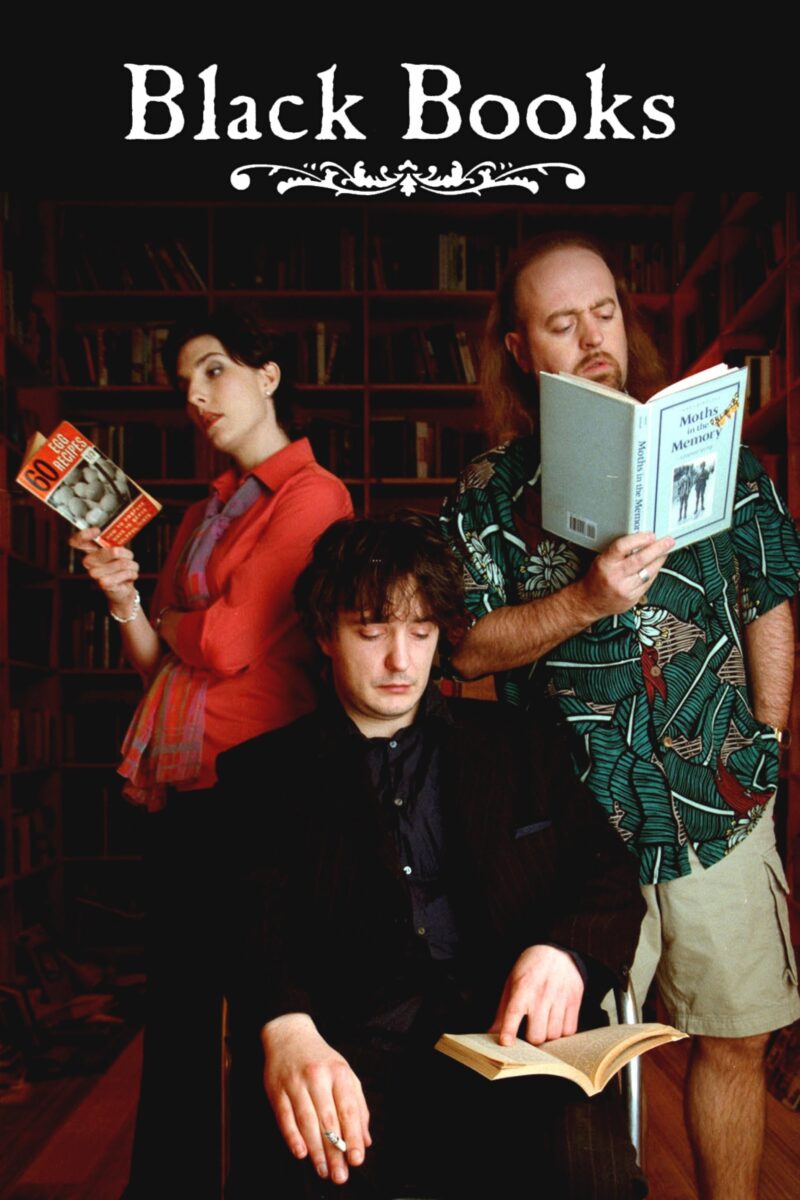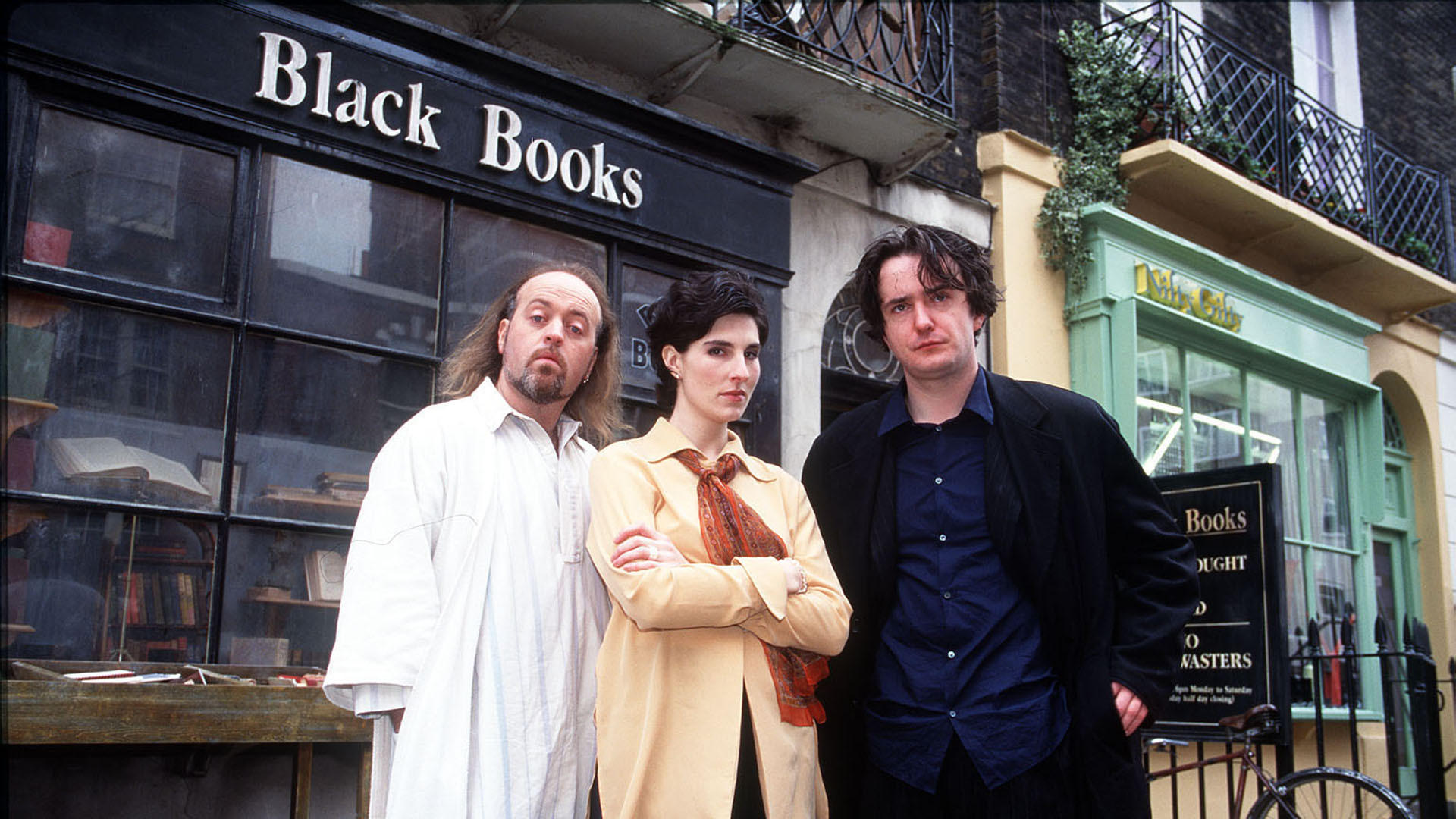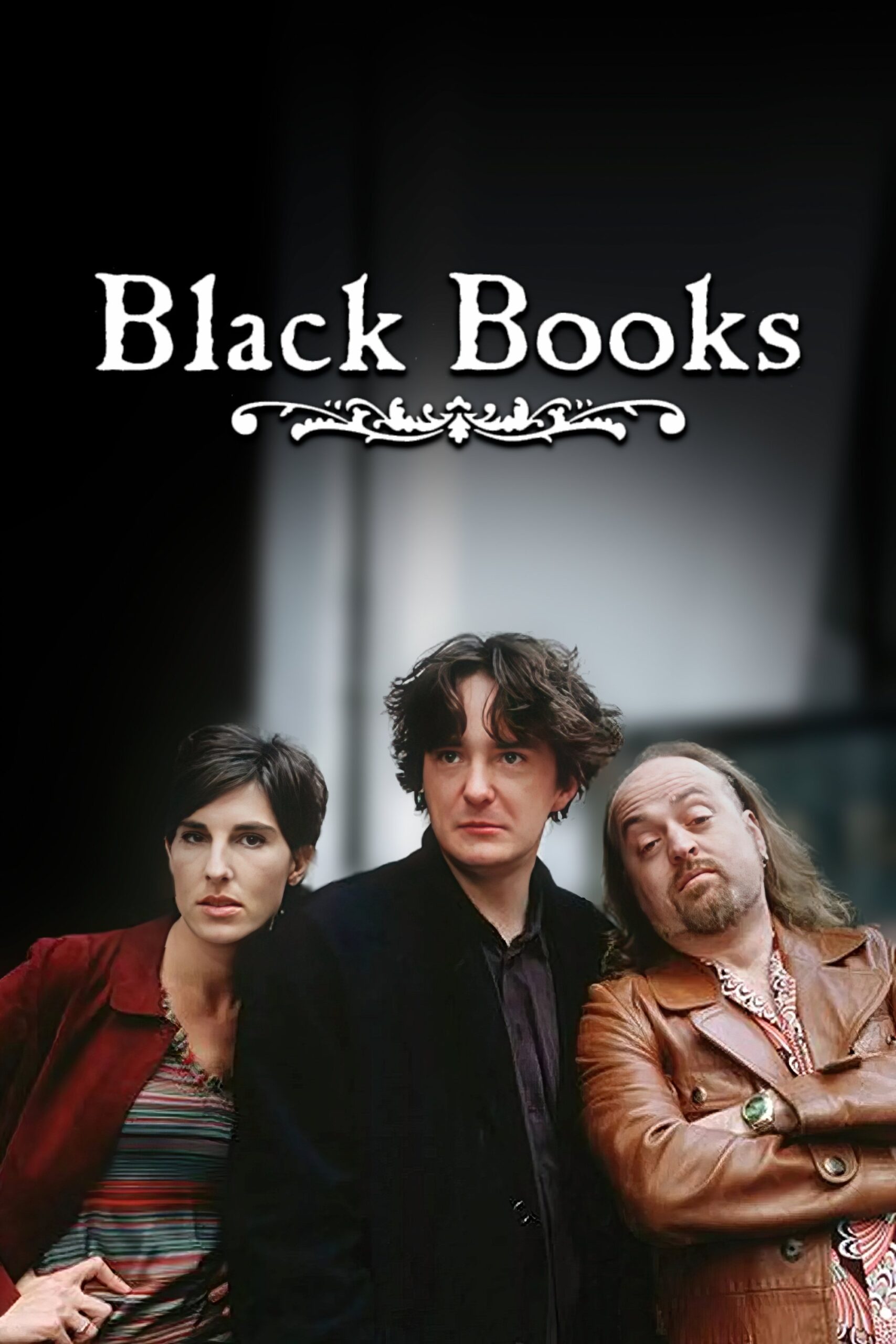
At a glance, Black Books looks like your typical sitcom setup – three dysfunctional oddballs stuck in a confined location, lobbing one-liners like grenades – but it veers beautifully off-road almost immediately. This isn’t another breezy BBC laugh track churner. This is grimy wine bottles rolling across the floor, half-read Tolstoy, collapsing shelving, and Bernard Black shouting into the void about the injustice of people existing.
Dylan Moran, who also co-created the series alongside Graham Linehan, plays Bernard with the precision of a man who’s either moments from a nap or a total nervous breakdown. It’s hard to overstate how instantly iconic Bernard became – a character who weaponised laziness, misanthropy, and literary snobbery into an art form. Somehow, you find yourself rooting for this surly nightmare of a man as he wages war on customers, tax returns, and the mere concept of mornings.
By Bernard’s side is Manny, played to pitch-perfect perplexity by Bill Bailey. It’s perhaps Bailey’s greatest screen role – not just the comic foil, but a man whose entire existence is a walking contradiction: capable, sweet-natured, occasionally feral, and full of unexpected musical or philosophical tangents. His journey from stressed accountant to shop-dwelling lunatic is a joy, and his loyalty to Bernard borders on Stockholm Syndrome – and yet, it makes total sense in this universe.
Tamsin Greig rounds out the trio as Fran, the vodka-swigging, emotionally frayed intermediary who runs a shop next door (though what she actually sells is gloriously vague). Her chemistry with both leads is the secret glue of the show, and she gets her fair share of the madness – from dating mishaps to that unforgettable episode where she accidentally inherits a family. Greig delivers every line with a blend of despair and deadpan, making Fran a strangely relatable island of chaos within chaos.
Structurally, Black Books leans heavily into the bottle episode format – not in the traditional sense of a cost-saving single-set experiment, but rather in tone. Every episode is a self-contained plunge into Bernard’s wine cellar of madness, often veering into surrealism without warning. Whether it’s Bernard becoming one with his chair, Manny performing dental surgery using household objects, or Fran attempting to pass herself off as a responsible adult, there’s an unpredictability that keeps things feeling fresh and frenzied.
What makes Black Books especially unique is how it completely diverges from the slick, overly produced comedy of its era. The early 2000s British scene was already thriving, with shows like The Office, Spaced, and Peep Show soon redefining comedy formats. But Black Books felt like the rebel of the group – grimier, shoutier, more chaotic, and absolutely not bothered with likeability or arcs. It carved its own corner and stocked it with anger, laughter, and surprisingly accurate critiques of retail life.
It was also a hub of up-and-coming talent. Keep your eyes peeled and you’ll spot now-big-name British comedy figures in tiny roles – including Spaced’s Simon Pegg, The Office’s Martin Freeman, and future household names like Rob Brydon and Olivia Colman. The cameos feel like a time capsule of future comedy greatness all dropping in for a pint of red and a quick insult from Bernard.
Sadly, like the best spirits, Black Books is gone too soon. Only three series were made, totalling just 18 episodes. But each one is a corker, tightly packed with razor-sharp wit, physical gags, surreal tangents, and the occasional explosion. And in true Bernard fashion, it never outstayed its welcome – it just stormed out mid-shift, muttering something about tax and the smell of people.
Verdict: 8/10 Black Books is a shop you’ll want to get locked in – where logic is a loose suggestion, wine is medicinal, and the customer is never, ever right.