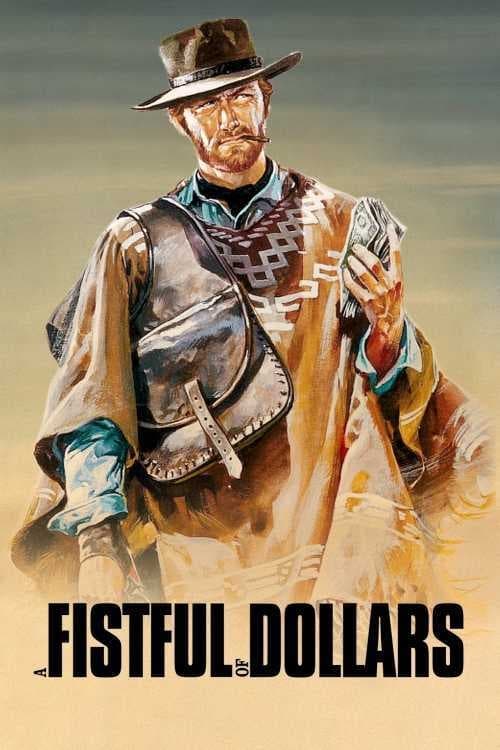
It’s been busy at Camp Cape, so let’s revisit the dusty frontier where it all began for Clint Eastwood’s legendary “Man With No Name.” Before he was growling at neighbourhood punks in Gran Torino, Eastwood was trading lead for lies in A Fistful of Dollars, Sergio Leone’s genre-busting rework of Akira Kurosawa’s Yojimbo — but with less samurai steel and more ponchos and pistols.
Our hero — if you can call a morally flexible drifter who pits entire clans against each other “heroic” — strolls into the sun-bleached town of San Miguel, sees an opportunity, and sets about playing two rival families like a pair of badly tuned guitars. The Rojos and the Baxters are already knee-deep in betrayal and bullet holes before Joe even lights his cheroot, but his arrival flips the local body count into overdrive.
Clint Eastwood is, naturally, the magnetic core of the whole sun-scorched affair. His squint has more dialogue than most of the cast combined. He’s an enigma wrapped in a poncho, holstering a deadpan charm and a six-shooter that always seems to be cocked just in time. Eastwood’s Joe is the prototype for every gunslinging anti-hero that’s come since — he doesn’t just shoot the bad guys, he outwits them, outplays them, then lights a cigar on the smouldering wreckage of their egos.
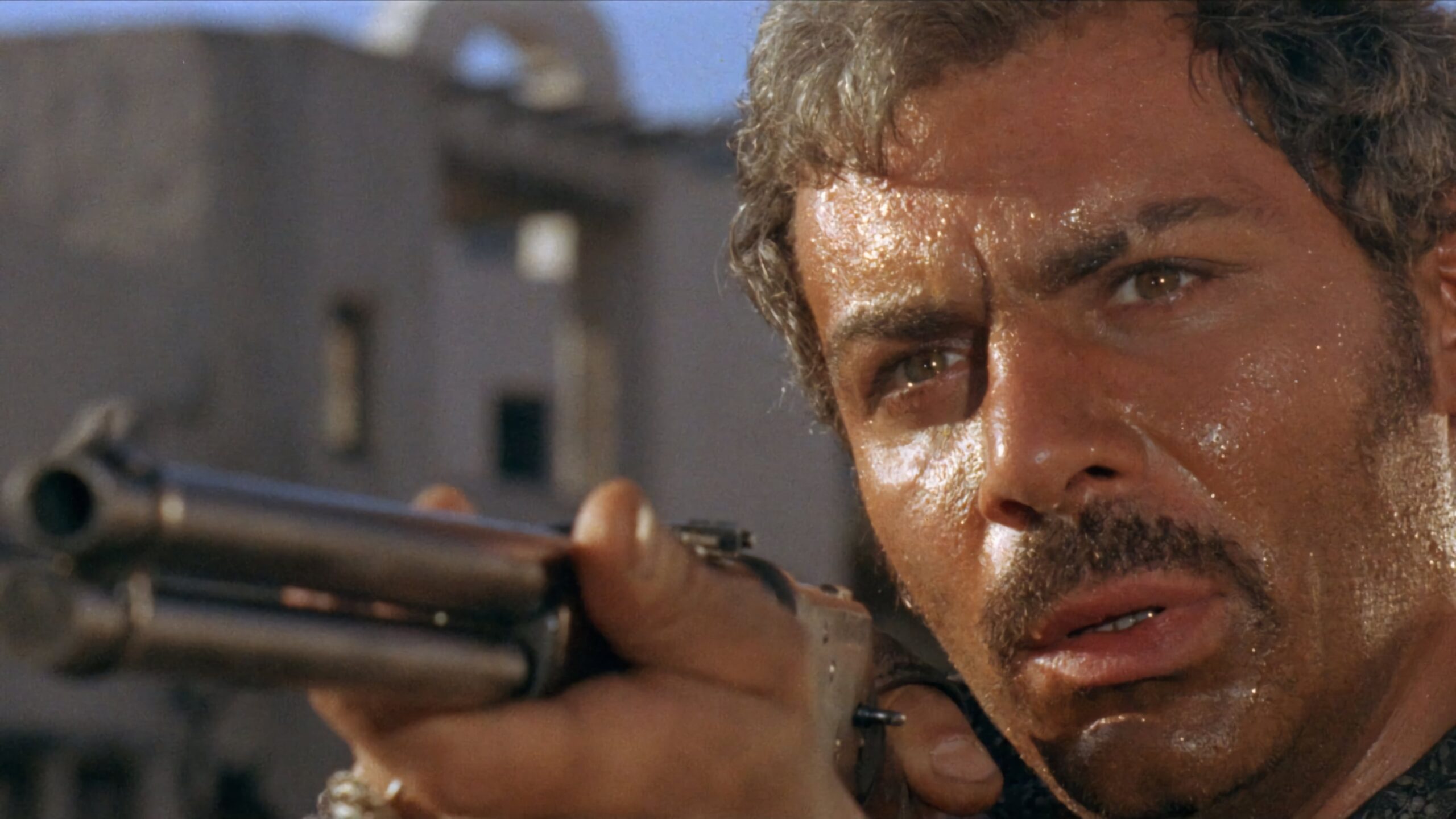
Now, let’s not ignore the elephant in the saloon — that infamous dubbing. The supporting cast is a cocktail of European talent (mostly Spanish and German actors), many of whom didn’t share a common language on set, let alone with Eastwood. This means every gunfight and dramatic stare-down comes with a slight sense that you’re watching an avant-garde puppet show. But here’s the twist — it weirdly works. The disjointed dubbing gives the whole film a dreamy, mythic vibe, as if you’re not quite sure whether this West ever existed or was just cooked up in a fever dream somewhere between Rome and Almería.
Sergio Leone’s direction cements A Fistful of Dollars as more than just a B-movie shoot-‘em-up. The framing is operatic, the pacing punctuated by those signature moments of frozen tension that drag you to the edge of your seat before erupting in thunderous gunfire. And let’s all raise a dusty glass to Ennio Morricone’s iconic score — because those piercing whistles and twanging guitars do half the storytelling before anyone’s even drawn a gun.
Is it perfect? Well, the plot is pretty straightforward: man arrives, manipulates, leaves a trail of bodies, rides off into the sunset — rinse and repeat. But its beauty is in the bravado. A Fistful of Dollars is less concerned with complexity and more interested in creating a mood, an atmosphere dripping with sweaty stand-offs, quick-draw justice, and moral ambiguity you could bottle and sell as snake oil.
Without this film, there’d be no Good, the Bad and the Ugly, no Tarantino homages, and possibly no Clint Eastwood as we know him today — an institution of cinematic stoicism and that lethal glare. The Spaghetti Western wouldn’t have swaggered onto the world stage, guns blazing, and Hollywood’s dusty cow towns would have stayed as squeaky clean as a John Wayne handshake.
So, if you’ve never sat through this classic because the dubbing put you off or you thought old Westerns were just for grandads and film students — pour yourself a glass of something strong, settle in, and let Joe teach you the fine art of playing both sides until the bullets run out. A Fistful of Dollars is an essential ride through the Wild West of cinema — rough around the edges, dubbed to hell, and all the better for it.
Verdict: A gritty, game-changing classic that put Eastwood’s squint — and Leone’s sweeping gunslinger opera — on the map. Sure, the dubbing is a trip, but so is the rest of this legendary shootout. – Alex