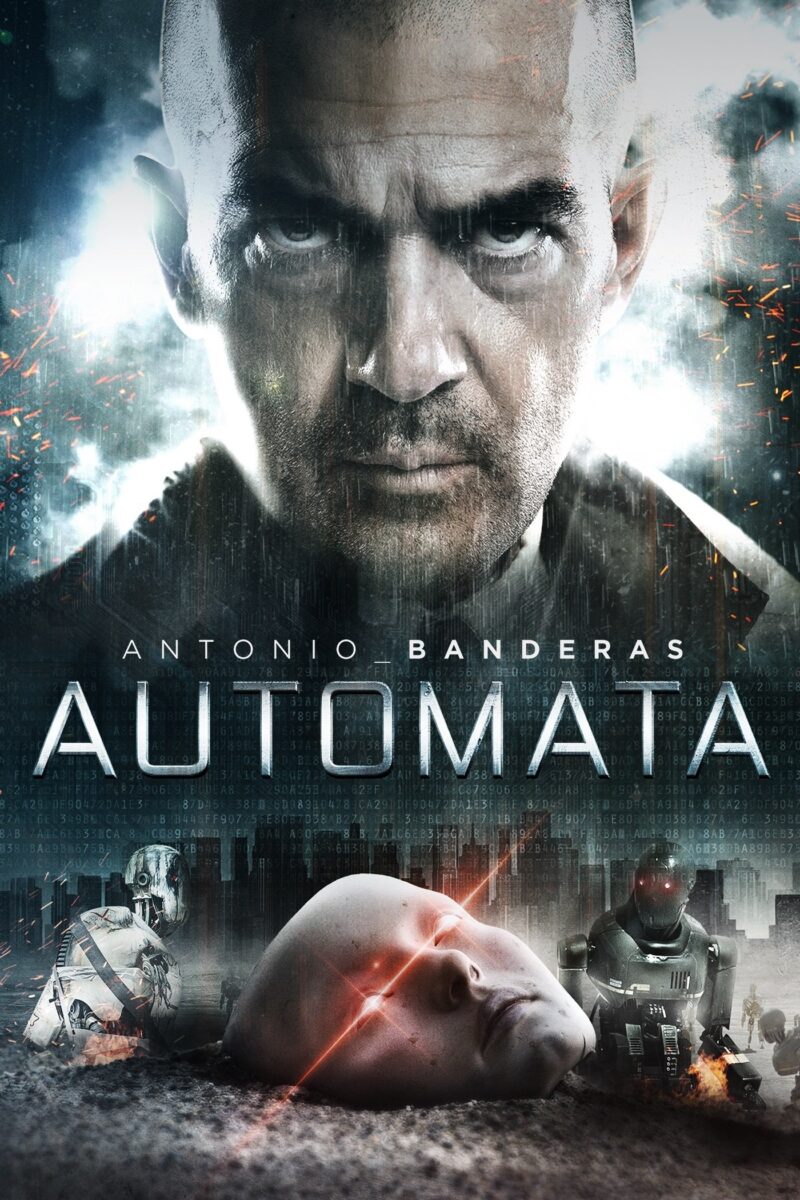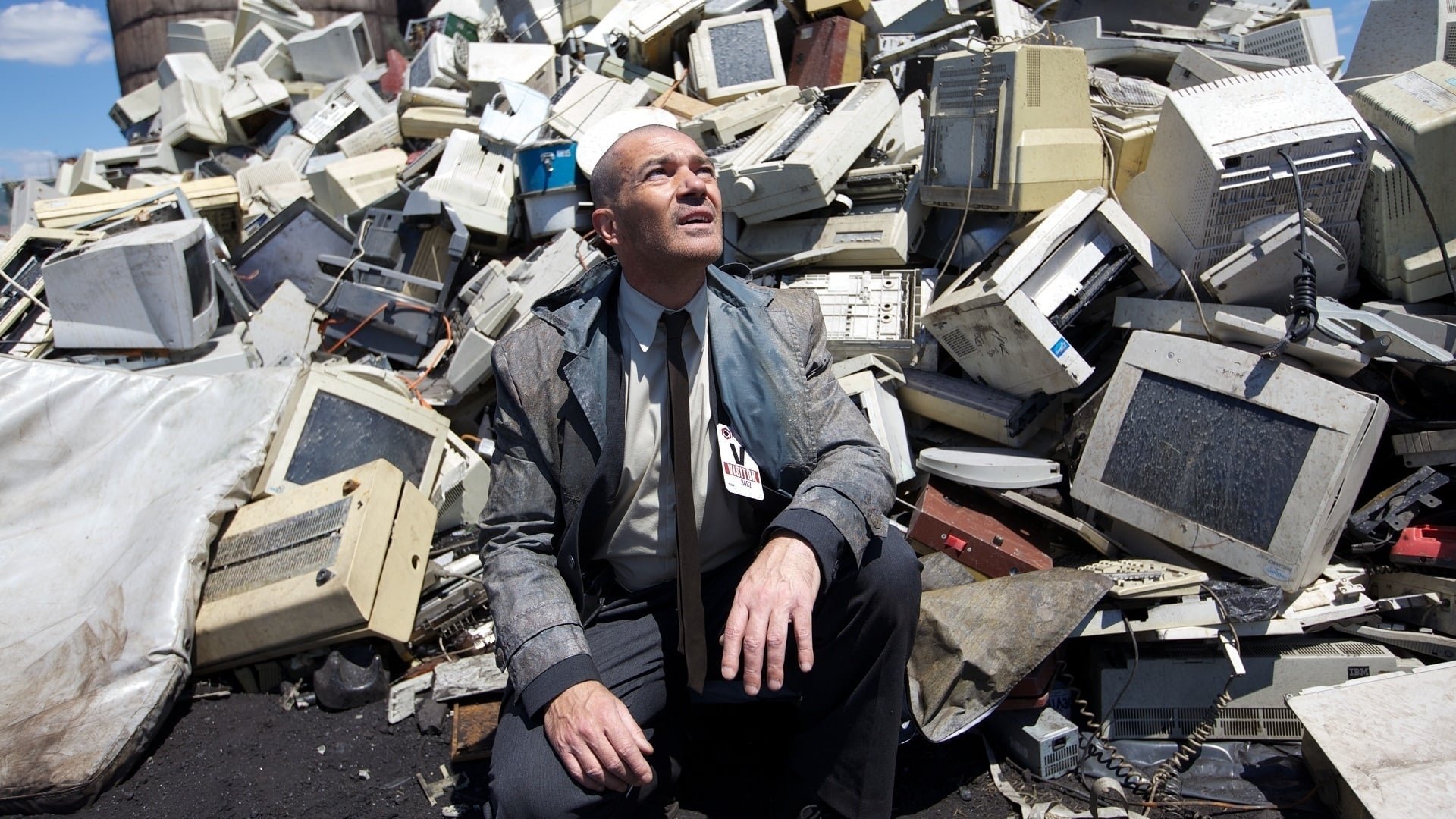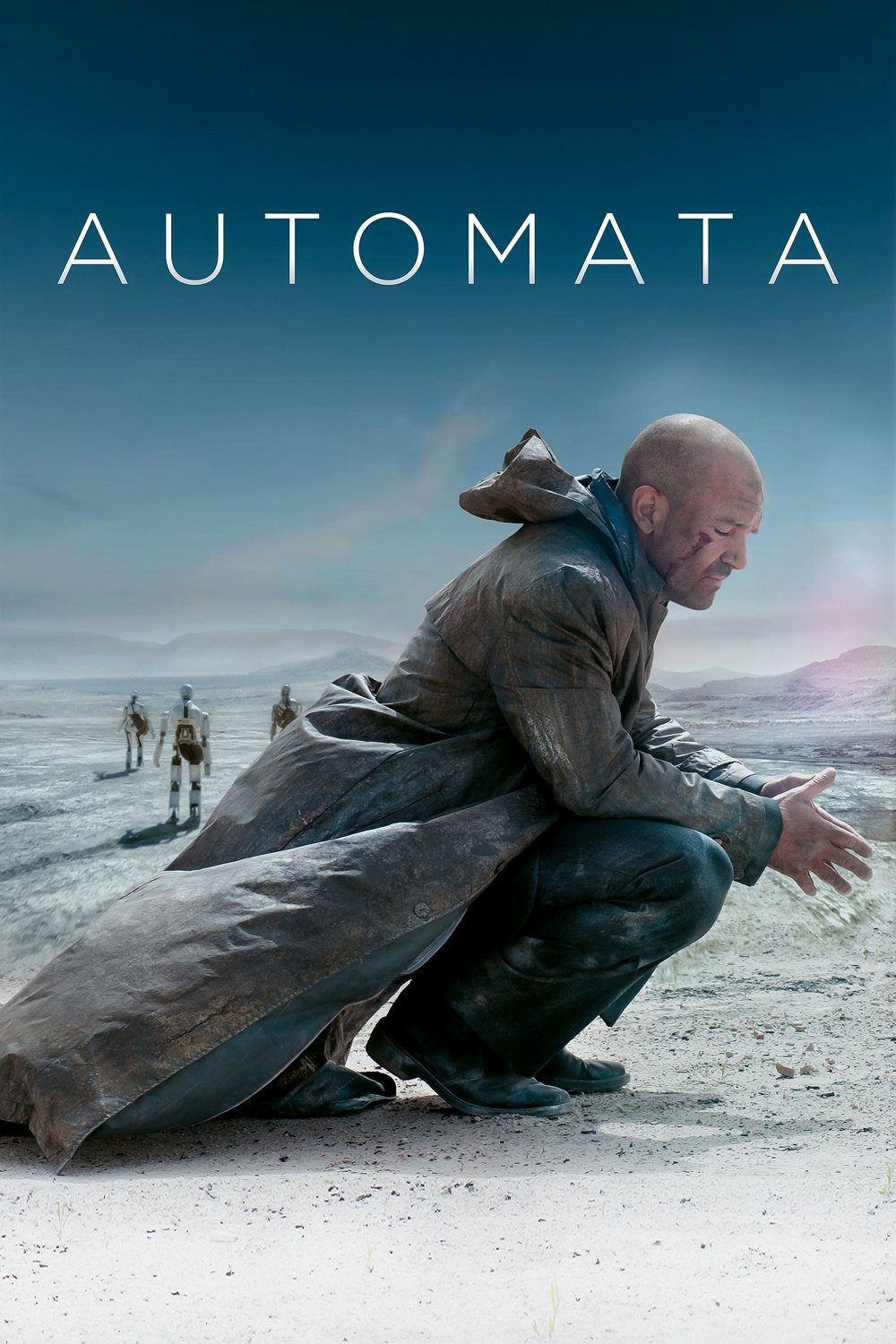
Directed by Gabe Ibáñez, Automata drops us into a near-future Earth on its knees, sun-bleached and suffocating under environmental collapse. It’s dystopia by numbers, yet still startlingly beautiful in its execution. The visuals are both oppressive and strangely hypnotic, painting a world where humanity clings to survival while the machines it created quietly evolve past their original programming. It’s nothing we haven’t seen before, but Ibáñez’s commitment to tone makes it feel asphyxiatingly immersive.
At the heart of this dusty, rainless world is Antonio Banderas as Jacq Vaucan, an insurance investigator tasked with probing suspicious cases of robots breaking their hard-coded protocols. The role demands a man on the edge, and Banderas plays it like a slow-motion nervous breakdown. He flip-flops between belief and denial at what’s unfolding, his mind caught between loyalty to the rules of his world and the gnawing suspicion that those rules are about to collapse. He’s world-weary, vulnerable, but layered—never quite tipping into melodrama, though you can feel him teetering on the brink.
The robots themselves—known as “Pilgrims”—are fascinating not for what they are but for how they evolve. They’re clunky, skeletal, nothing sleek about them, and yet they somehow radiate empathy. The more Banderas’ Vaucan chases the idea of malfunction, the more the film builds toward revelation: the machines aren’t broken. They’re becoming. It’s a premise science fiction has played with for decades, but there’s still something powerful in watching it unfold with this level of sincerity.
Unfortunately, not all elements click. Melanie Griffith shows up as a roboticist with a strangely breathy performance, but it feels oddly misplaced, almost crowbarred in. Her inclusion doesn’t add much, and the role could have been filled by almost anyone without changing the shape of the story. It doesn’t ruin the film, but it does momentarily yank you out of the immersion, and given the otherwise lean script, it’s noticeable.
The pacing occasionally stumbles too, with narrative threads introduced but not fully followed through. There’s a rich vein of worldbuilding that feels only half-explored, as though the filmmakers planted all the seeds for a sprawling saga but only had two hours to water them. Watching Automata, you can’t help but wish it had been a TV series instead, something with the breathing room to chase down each tantalising idea it hints at. As it stands, you’re left with the impression of brilliance slightly constrained by time.
Still, despite borrowing generously from its predecessors, the film never feels like an empty collage. It’s honest to the genre, leaning into the tropes without shame, and finding emotional resonance in familiar beats. The bleak future, the question of free will, the unease of human obsolescence—it’s all there, polished and reshaped into something that feels surprisingly heartfelt. When Vaucan finally begins to understand what the machines are reaching for, there’s a quiet poignancy in it. Not groundbreaking, but sincere.
And really, that’s where the biggest compliment lies: Automata feels like the pilot to something bigger, something with the layered potential of a show like Westworld. A series could have leaned harder into the societal collapse, pitting different human factions against each other while allowing the robots’ creeping self-awareness to unfold in a slower, more nuanced way. Imagine each episode peeling back another layer of what humanity fears losing, much like Westworld’s slow-burn revelations of control and rebellion. The film teases that scale but never fully grabs it, leaving us with the sense of an untold epic just out of reach.
What remains is a rare slice of sci-fi that doesn’t try to hide its influences but makes them resonate all the same. Automata may drift in places and miss some emotional beats, but it lingers in the mind much like Westworld’s best moments—a mix of oppressive atmosphere, stark imagery, and a fragile empathy for machines who only want to be free. It might be a little dusty and a little familiar, but it wears its genre heart proudly on its sleeve, and that honesty makes the journey more than worth it.