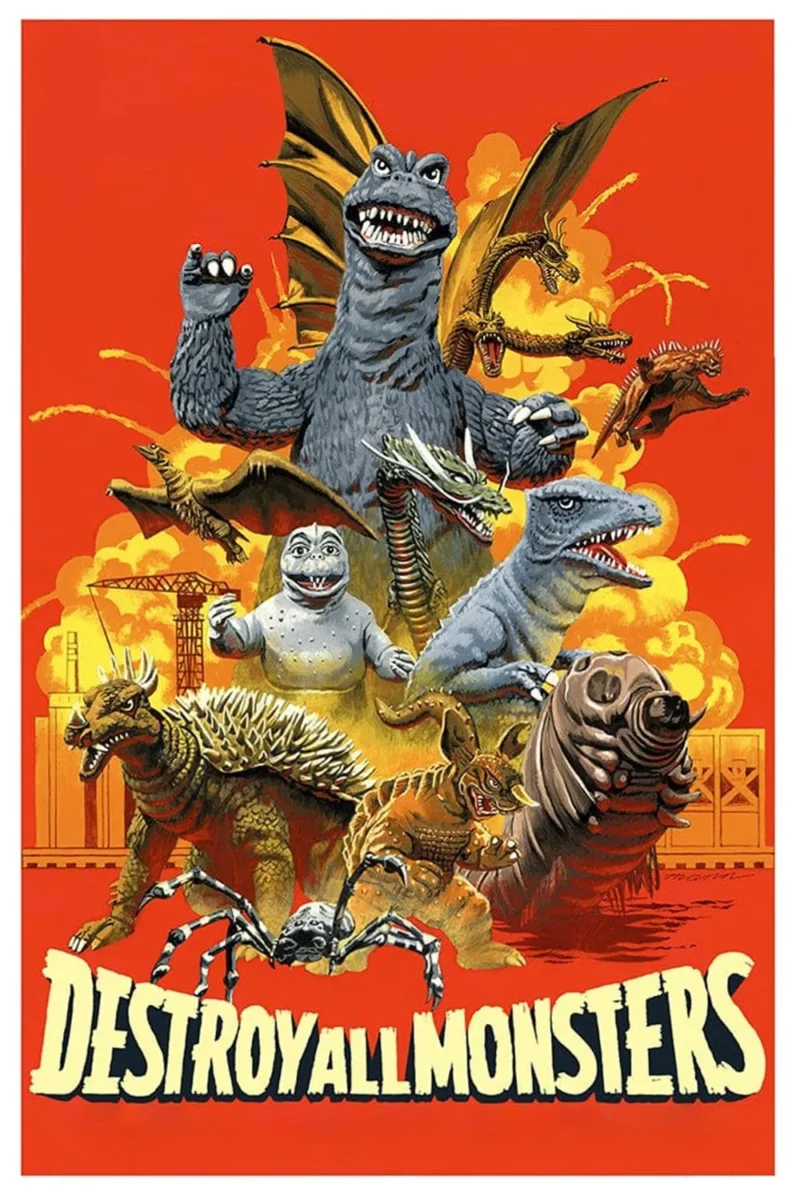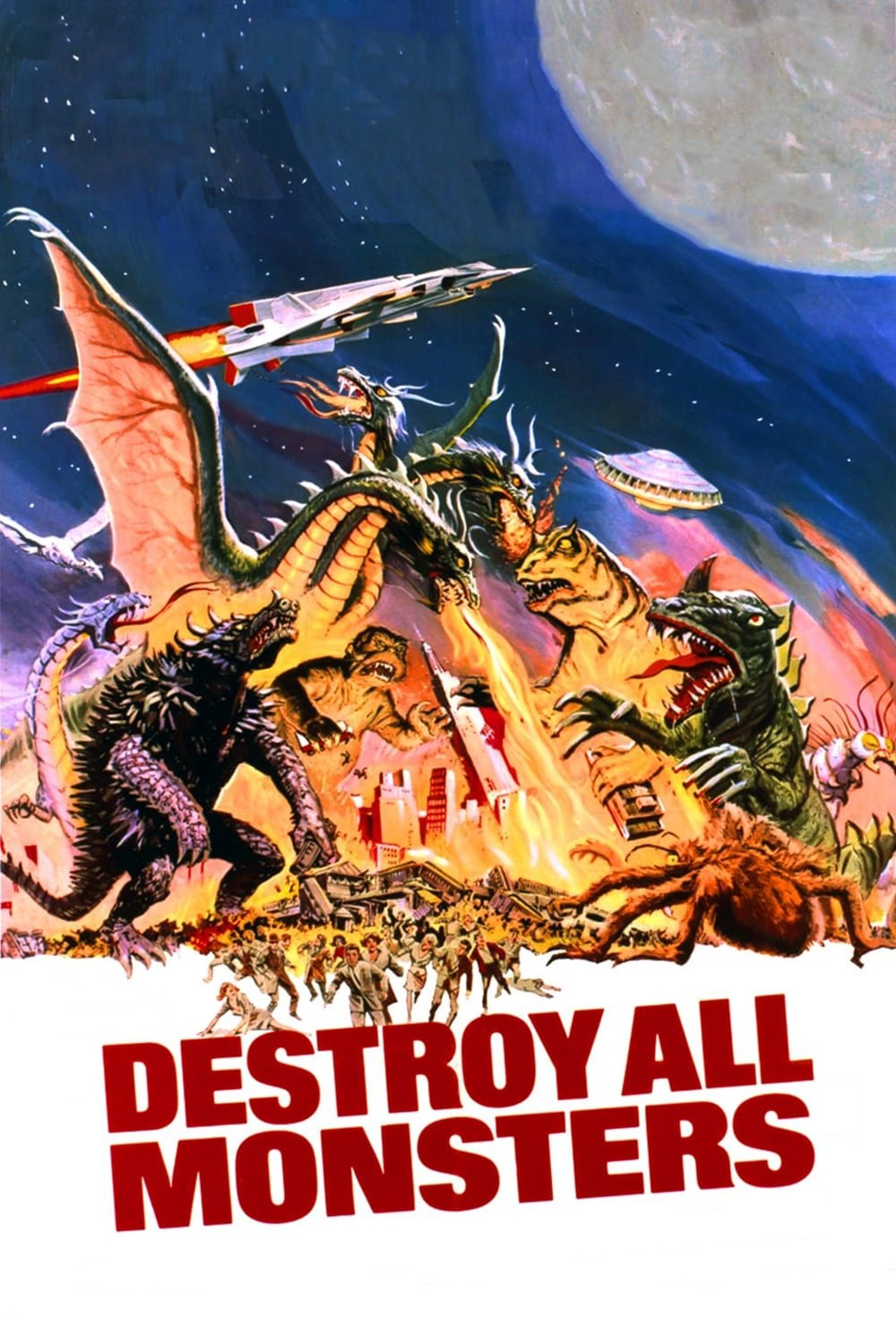
Classic kaiju doesn’t really get much bigger or bolder than Destroy All Monsters. Released in 1968, this is Toho basically saying: “Fine, you want monsters? We’ll give you all the monsters.” For fans who cut their teeth on double-feature VHS tapes, this one always had a certain mythical quality. In my case, it was the second tape in a double set I nearly wore out as a kid, endlessly rewinding the dubbed version to the point where I could almost recite the lines in that wonderfully wooden cadence. By then, the film was already thirty years old, but it still felt fresh and exciting—like I was sneaking a piece of cinematic history out of its dusty vaults and giving it a new life in my living room. Subtitles might give you the purist’s experience, but the charm of badly matched lip-flaps and clipped English voice actors is half the fun.
The story is about as gloriously pulpy as they come. Humanity corrals all of Earth’s giant monsters onto “Monsterland,” a secured island paradise where Godzilla, Rodan, Mothra, and the gang can stomp around without bothering the neighbours. Of course, peace never lasts long in kaiju-land. An alien race, the Kilaaks, show up with the rather unneighbourly plan of mind-controlling the beasts and unleashing them on the world’s major cities. Cue monsters trashing everything from Paris to Moscow to New York. Eventually, the humans rally, free the monsters, and in true Showa-era spirit, everyone unites against a bigger threat—King Ghidorah, the three-headed golden dragon who just can’t seem to stop picking fights.
Akira Kubo stands tall among the cast, giving a surprisingly solid performance in a film where actors are often little more than exposition machines. He injects some humanity into the chaos, grounding the narrative in a way that makes all the sci-fi silliness a little more digestible. The rest of the ensemble hold their own too, though let’s be honest: we’re all here for the monsters.
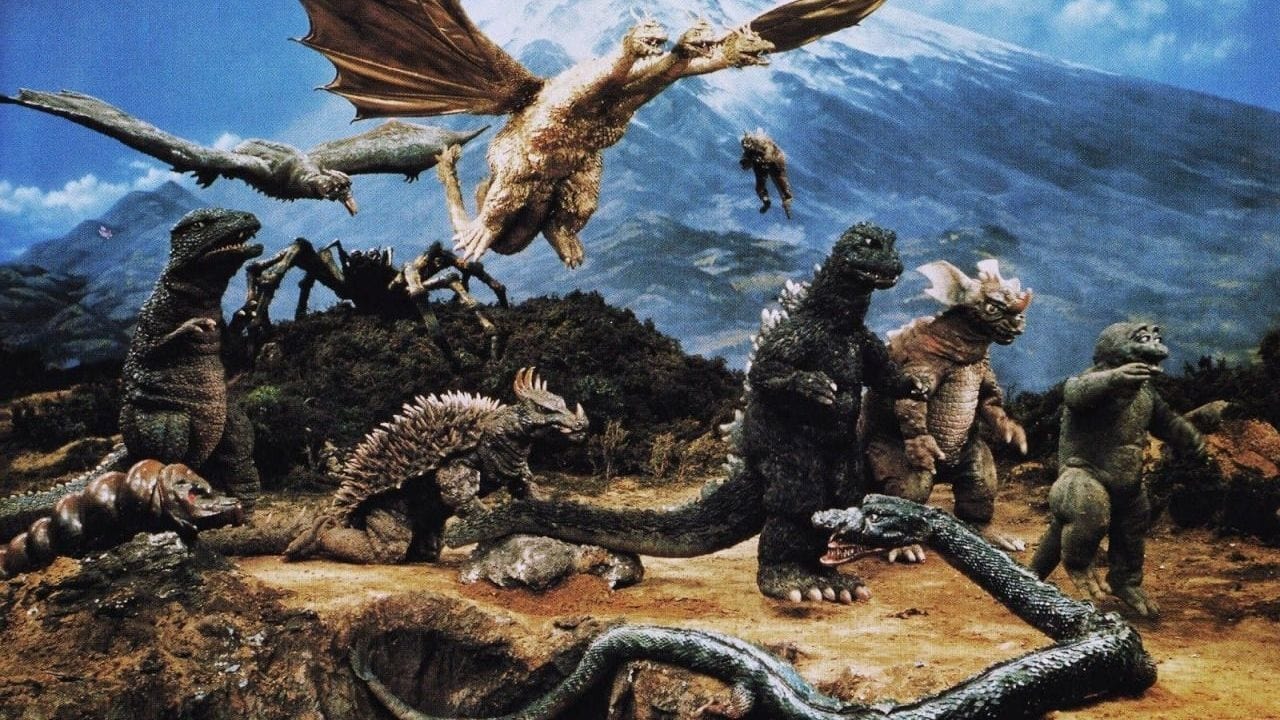
And what monsters they are. This was peak “men in suits” filmmaking, with actors sweating buckets inside rubber Godzilla costumes, tripping over meticulously constructed miniature cities. The practical effects are a joy to behold—crumbling buildings made of plaster and cardboard, tanks the size of shoeboxes firing at beasts towering just high enough to graze your living room ceiling if you had one in your house. There’s an honesty to these effects that CGI, no matter how slick, just can’t replicate. Watching a man stomp through balsa wood skyscrapers has a tactile authenticity that digital pixels lack.
Of course, compared to modern kaiju epics like Godzilla Minus One or Legendary’s MonsterVerse, Destroy All Monsters feels quaint, even sluggish at times. The pacing wanders, the dialogue is clunky, and the actual plot feels like someone just mashed together Cold War paranoia with a pinch of Saturday morning cartoon logic. But remember—this was the late 60s, right in the thick of the space race and alien-invasion mania. The meandering narrative about moon bases and interplanetary conquest isn’t so much filler as it is a reflection of the era’s obsessions.
And then there’s the finale. After nearly ninety minutes of set-up, the payoff is a monster battle royale that still delivers. Seeing Godzilla, Anguirus, Gorosaurus, Mothra, and others dogpile Ghidorah is the kind of gleeful chaos that makes you want to grab a tub of popcorn the size of your torso. It’s not polished, it’s not elegant, but it’s endlessly entertaining.
What makes Destroy All Monsters endure is its accessibility. As a kid, it’s dazzling: a line-up of titans smashing the world to pieces. As an adult, it’s nostalgic: a reminder of a time when cinema magic meant painted backdrops and model tanks. It’s one of those films that perfectly straddles the line between kitsch and classic.
So yes, it meanders. Yes, the effects are dated. But it’s also a time capsule of the Showa era at its most ambitious, bursting with imagination and practical artistry. For newcomers, it might feel overwhelming, like being dropped into a party where you don’t know anyone but everyone’s already dancing on the furniture. Stick with it, though, and you’ll find yourself swept along by the sheer audacity of it all.
Destroy All Monsters earns its stripes not by being flawless, but by being unforgettable. A kaiju jamboree for the ages.