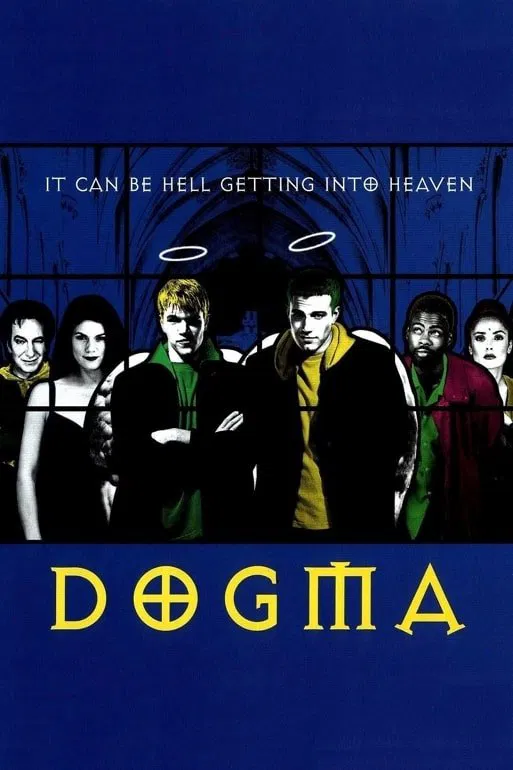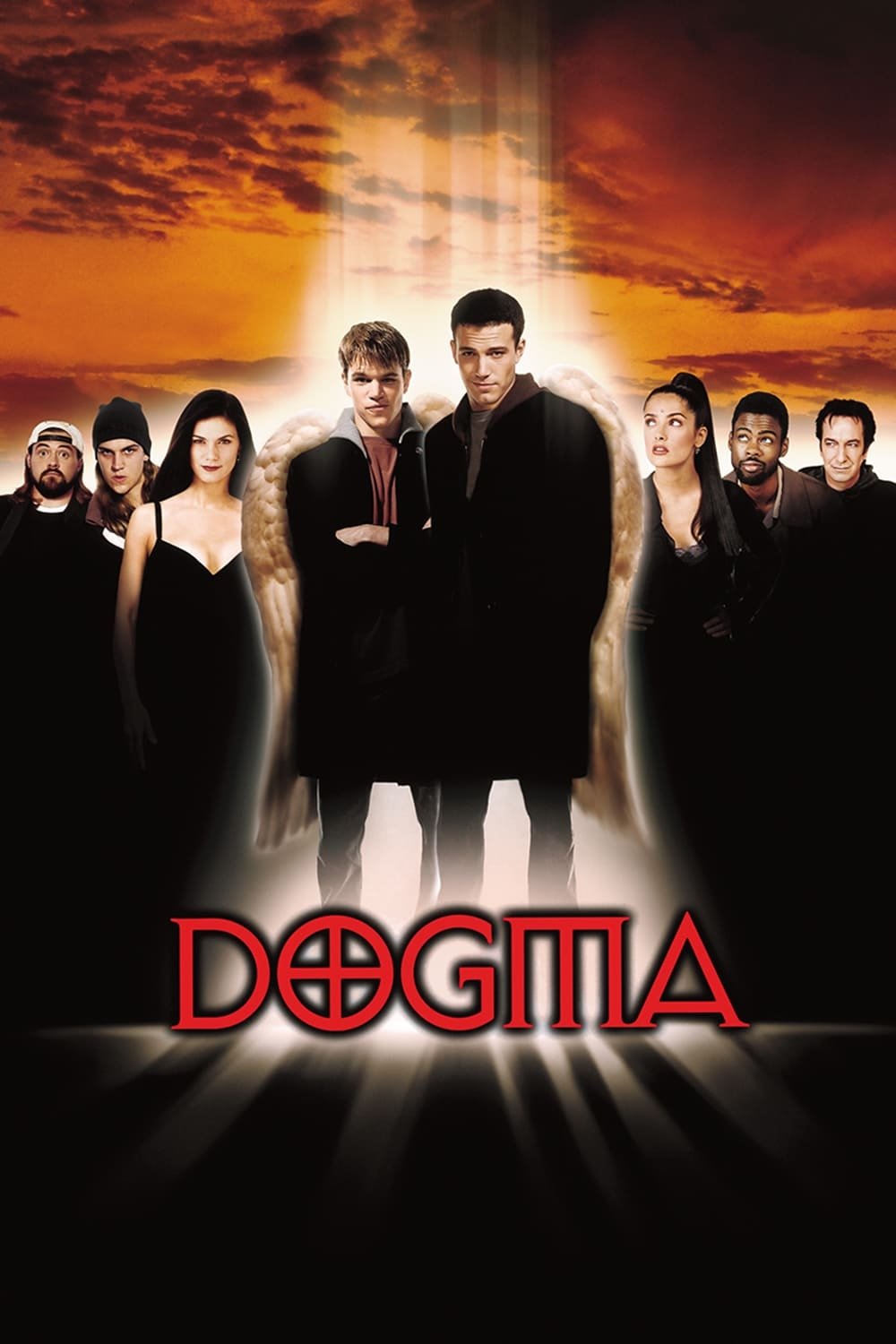
Kevin Smith’s Dogma isn’t just a movie—it’s a firecracker lobbed into the quiet church service of late 90s cinema. By the time it arrived in 1999, Smith had already carved out his own little slice of pop culture with Clerks and Mallrats. But Dogma was the point where he reached out of the convenience store and comic book shop, tore the roof off the Jersey suburbs, and decided to play with heaven, hell, and everything in between. In many ways, it’s the boldest of his early films and easily the most ambitious in terms of world building, expanding the View Askewniverse into cosmic mythology without losing that Smith-brand of vulgar comedy and stoner wisdom.
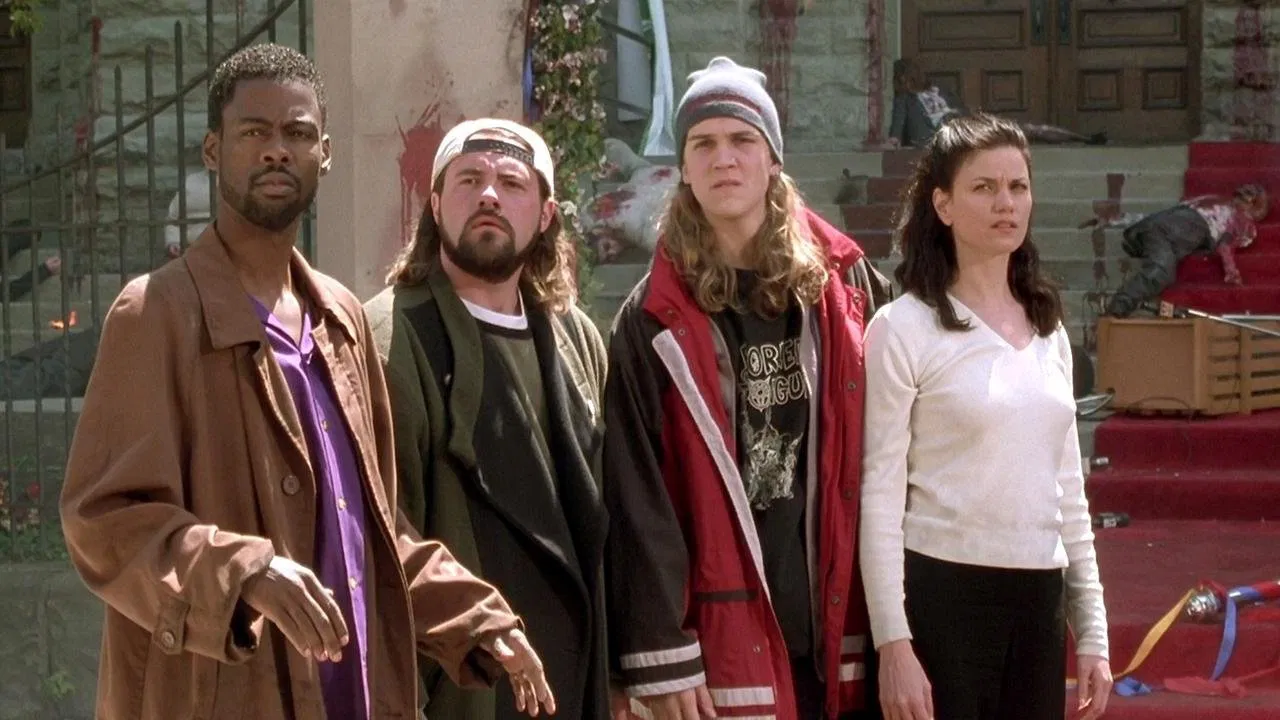
The plot is surprisingly straightforward for a film that throws so much absurdity at the wall. Two fallen angels, Loki and Bartleby (Matt Damon and Ben Affleck, enjoying their Good Will Hunting afterglow), stumble across a loophole in Catholic dogma that could get them back into Heaven. The snag? If they succeed, they’ll unravel existence itself. Enter Bethany (Linda Fiorentino), a lapsed Catholic charged with the small task of stopping them. Along the way she picks up an assortment of sidekicks and interlopers—Chris Rock as the thirteenth apostle who never made the Bible cut, Jason Lee chewing scenery as the demon Azrael, Salma Hayek as a muse moonlighting in a strip club, and of course Jay and Silent Bob, Smith’s own running gag turned unexpected saviours.
And then there’s Alan Rickman as Metatron, the voice of God. Rickman steals every scene with his sardonic disdain and impeccable delivery, grounding the film in a performance that’s both hilarious and oddly poignant. His chemistry with Fiorentino, in particular, gives weight to what could have been a one-note divine exposition dump. Casting Rickman was genius. Casting Alanis Morissette as God herself was divine inspiration. Without a single spoken word, she manages to capture the ineffable with a smile and a cartwheel. For any Gen-Xer (and quite a few millennials) who grew up with Jagged Little Pill, hearing her voice on the soundtrack and then seeing her appear as the Almighty was a sly cultural wink that cemented the film’s cult legacy.
Tonally, Dogma juggles a lot. It’s part theological satire, part road trip comedy, part battle of good and evil. The film has priests with machine guns, hockey-playing demon kids, poop monsters, and drunken prophets—yet somehow Smith makes it all hang together. The irreverence was, and still is, shocking in places, but it’s never mean-spirited. Smith clearly has affection for religion, even as he skewers its institutions. There’s a sense he’s pulling apart dogma not to destroy faith but to laugh at the absurdity of bureaucracy trying to contain the infinite.
Production-wise, it’s the slickest Smith film of his 90s run. The cinematography feels more ambitious than the indie scrappiness of Clerks or Mallrats, the visual effects (dated now, but serviceable then) give a sense of grandeur, and the ensemble cast elevates the whole thing. The dialogue, as always with Smith, is the star—long monologues about faith, comic books, sex, and sin all delivered in the cadence of people who’ve spent far too much time behind a counter.
Still, Dogma isn’t flawless. The pacing sometimes stumbles, and Fiorentino’s performance as Bethany feels oddly muted, particularly when surrounded by so many larger-than-life personalities. At two hours, it occasionally meanders before snapping back into gear with another philosophical tangent or Jay and Silent Bob punchline. But the ambition and sheer audacity of the project carries it. It’s hard not to admire a film that dares to have fun with theology while also being so unabashedly weird.
More than anything, Dogma cemented Kevin Smith as more than just “the indie guy who made Clerks.” It proved his universe could expand into realms you’d never expect from a man who once gave us thirty minutes of Star Wars chat in a convenience store. And for fans, it remains one of the defining pieces of the View Askewniverse—funny, messy, blasphemous, and oddly heartfelt.