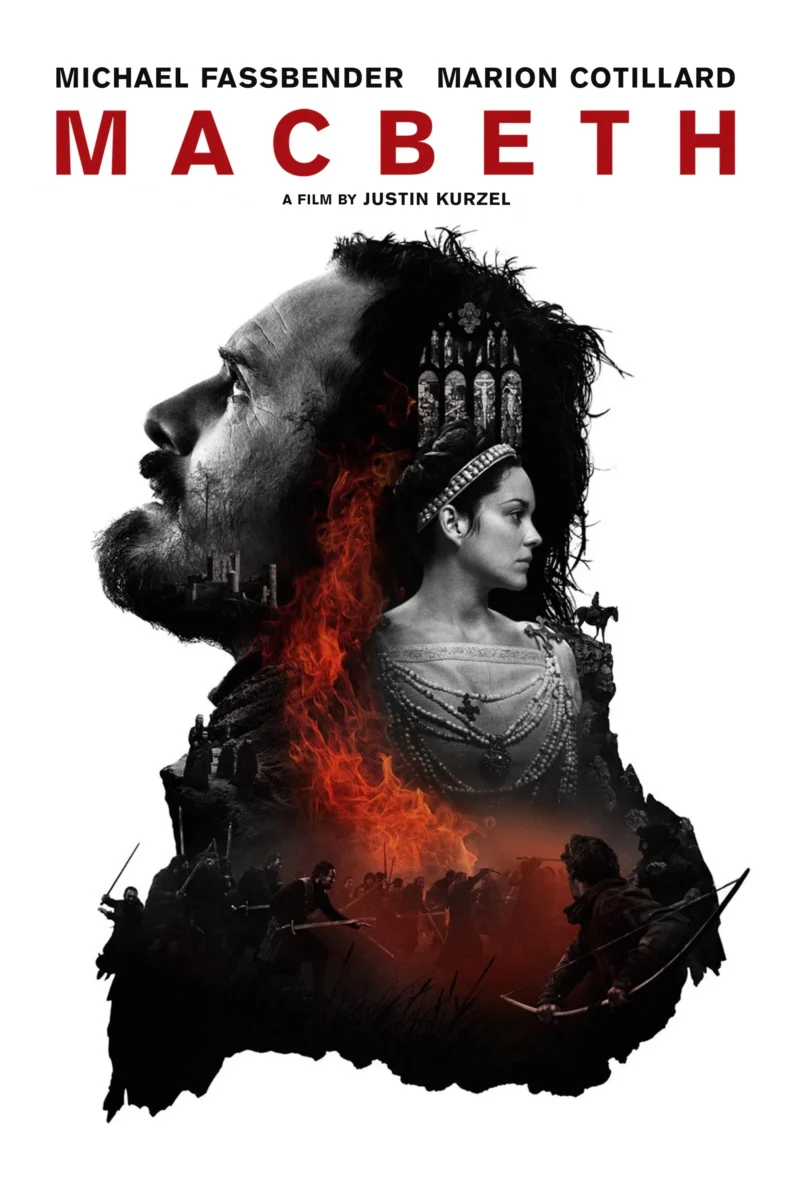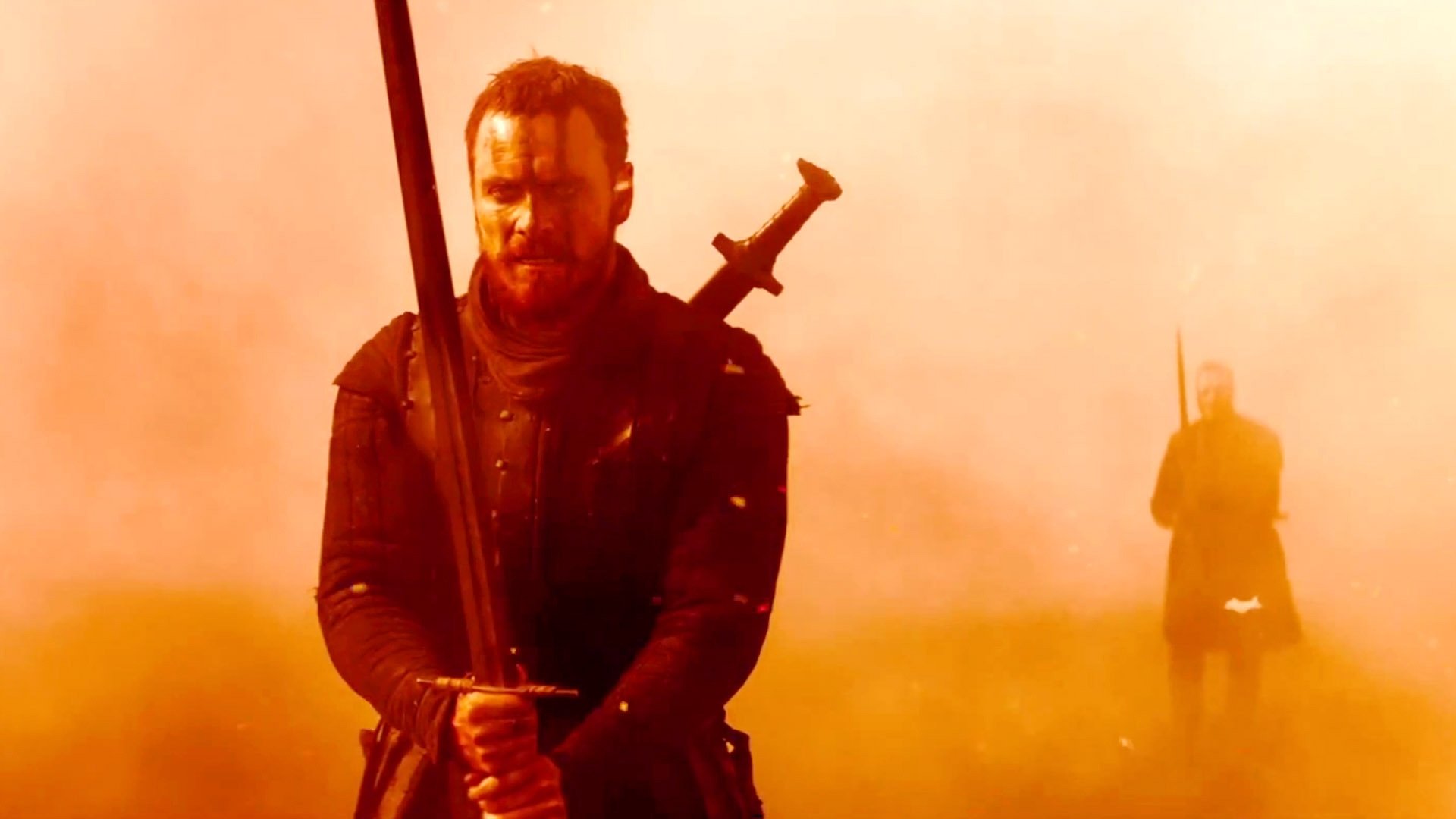
When it comes to adapting Macbeth, you can’t exactly knock the story. It’s a classic—etched in school curriculums and etched in our cultural DNA. The rise and fall of the ambitious Thane is drama at its most primal, and when given a cinematic canvas, it should roar. Kurzel certainly makes it roar, or at least thunder, with a production drenched in mud, fire, and blood, hammering home a sense of medieval brutality. The opening battle is pure visual carnage, slow-motion swords colliding, dust rising, crimson splashing—a Game of Thrones style spectacle designed to pull you straight into the muck. In that sense, I was entirely here for it. Big-screen Macbeth action feels overdue.
But while the carnage was visually arresting, it sometimes became a distraction. Kurzel’s direction leans into a visceral approach, and with it comes a pacing problem. The story drags in places, not for lack of action but because the rhythm of Shakespeare’s text struggles against the cinematic style. Long stretches hang heavy, like the air in a battlefield after the smoke clears. It’s not that the poetry is missing, but it feels buried beneath the director’s insistence on grit and gore.
Compounding that issue is the sound design. Our 5.1 surround turned what should be sharp and cutting dialogue into a muffled mess at times. More than once, I found myself flicking on subtitles just to keep pace with the play I already know by heart. The clash of swords, the roar of wind, the thrum of drums—they’re powerful, but too often they drown out the words, which in Shakespeare should always reign supreme.
As for performances, Fassbender’s Macbeth is… serviceable. To say it was wooden wouldn’t be fair—he certainly gives the character a brooding, haunted quality—but it never quite feels natural either. His delivery veers towards rigid, as if every line is rehearsed rather than lived. There’s menace in his eyes, yes, but the descent into madness never hits the heights it should. Compare that to Sean Harris’ Macduff, who practically steals the whole affair. Harris finds the passion, the anguish, the raw edge that makes you sit up and pay attention. In a film this heavy, that spark of life is priceless.
The supporting cast does its share of heavy lifting too. Paddy Considine as Banquo brings a grounded warmth that makes his fate all the more tragic. David Thewlis and David Hayman, seasoned as they come, lend real gravitas to their roles, embodying loyalty and authority with the kind of lived-in weight Shakespeare demands. Their presence alone anchors scenes that might otherwise float away in a sea of mud and stylised bloodletting.
But perhaps the most fascinating performance comes from Marion Cotillard as Lady Macbeth. Cotillard doesn’t go the way of the shrieking harpy or venomous schemer that often defines the role. Instead, she underplays it—quiet, deliberate, and almost fragile. Her manipulation of Macbeth feels more like the slow tightening of a noose than the crack of a whip. When she later unravels, Cotillard gives the famous sleepwalking scene an intimacy that chills more than any shouted line could. There’s a spectral sadness to her presence, as if she too is a victim of the tide they unleashed, and it lingers long after the credits.
Stylistically, the film is a triumph of atmosphere. The cinematography captures mist-draped landscapes, orange flames licking against shadow, and barren stretches of earth that feel more like hell than Scotland. Each frame looks like a painting dipped in ash and blood, every shot weighed down by elemental forces. There’s a deliberate slowness to the way Kurzel frames his world—fire flickering on armour, banners hanging heavy with dew, smoke swirling across the battlefield—that gives the film a hypnotic texture. Even if the words sometimes struggle to be heard, the imagery screams.
The decision to introduce a child Weird Sister alongside the usual trio was inspired, lending a chilling edge to the witches’ appearances. There’s something deeply unsettling about the innocence of a child cloaked in prophecy, and it plays wonderfully against the grim brutality of everything else on screen. It’s a reminder that the supernatural in Macbeth isn’t about fireworks or spectacle—it’s about the slow drip of inevitability, the sense that fate is already written and the players are just catching up.
And yet, for all that, it left me wanting. Kurzel’s Macbeth feels less like a tragedy of ambition and madness and more like a parade of aesthetic choices. The bones of the play are unshakeable, but here they’re draped in flesh that sometimes obscures more than it reveals. It’s bold, yes, and often beautiful, but beauty without balance risks losing the beating heart of the Bard.
Still, if you’re in it for Shakespeare with a Thrones twist, there’s plenty to admire. The grit, the fire, the supernatural chill—it all looks the part. But for those of us who want the words to cut sharper than the swords, subtitles might be your best friend.