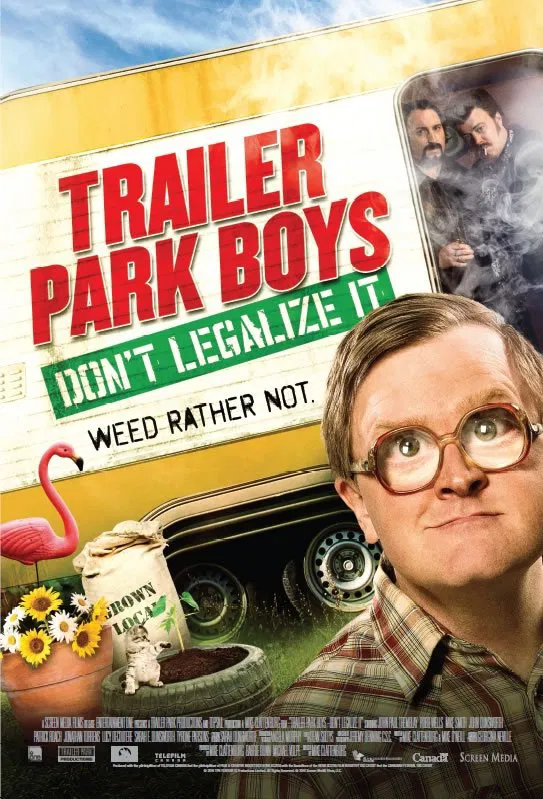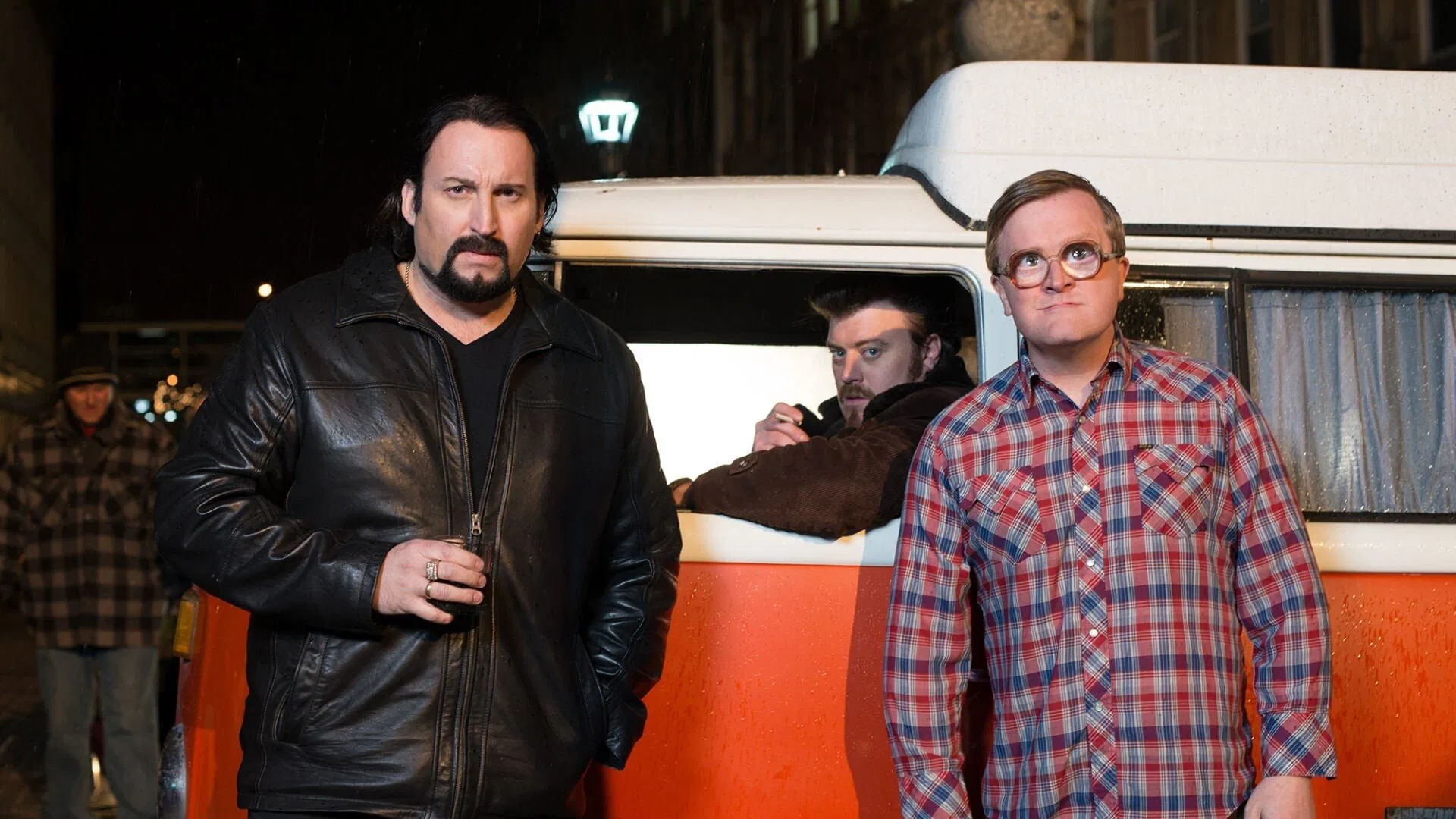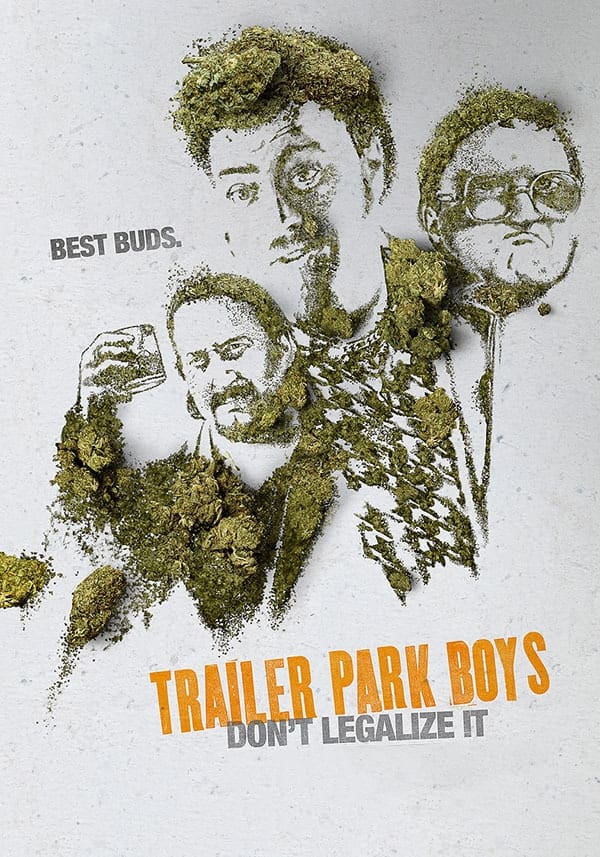
Every time the Trailer Park Boys break free of Sunnyvale, you half-expect the whole thing to collapse under its own weight. After all, this is a franchise that thrives on the enclosed ecosystem of a Nova Scotian trailer park, where liquor-fuelled schemes and weed-related disasters play out in a fishbowl of chaos. But Don’t Legalize It proves again that the Boys can stumble into the wider world without losing the essence of what makes them so enduring. It’s not polished cinema, but then again, if it were, it wouldn’t be Trailer Park Boys.
The plot, as always, is deceptively simple. Ricky is in crisis mode because the Canadian government is proposing to legalize cannabis. In any other movie, this would be framed as the dawn of a new age, but for Ricky, who has built his entire sense of worth and livelihood around growing and selling weed, legalization is nothing short of an existential nightmare. His paranoid breakdown is played for laughs but also lands with surprising resonance, skewering the way black-market entrepreneurs can be left behind by progress. Robb Wells makes Ricky’s madness relatable even as it veers into the ridiculous, throwing tantrums, conspiracy theories, and half-baked plans around like confetti.
Julian, forever clutching a rum-and-coke like it’s an extra limb, brings his usual brand of dodgy entrepreneurship to the mix. His schemes may change but the outcome rarely does—he’s forever one step away from the big score, forever about to lose everything. The film leans into his role as the “brains” of the group, giving him the sort of plotline that could almost stand on its own but only really works because of the dynamic with Ricky and Bubbles. The fact that John Paul Tremblay can keep a straight face in the middle of this circus remains one of the franchise’s great mysteries.
Bubbles is once again the beating heart of the story. Mike Smith has always made sure Bubbles is more than comic relief, and here his subplot about finding stability for himself and his beloved cats gives the film its grounding. He’s sweet, tragic, and weirdly wise, which is exactly the role he plays within the wider lore of Trailer Park Boys. Whenever the madness tips too far, it’s Bubbles who pulls it back, whether through genuine concern or just by pointing out the obvious with his squeaky, bespectacled charm.
Of course, no trip outside Sunnyvale is complete without Jim Lahey. John Dunsworth’s Lahey remains one of television and film’s greatest comic creations, a man who can turn drunken rambling into Shakespearean insult. His presence here is, as always, magnetic. Whether he’s spewing prophetic nonsense about “shit winds” or stumbling into yet another scheme to bring down the Boys, he dominates every scene he touches. Alongside him is Randy, Patrick Roach’s burger-loving sidekick, whose shirtless loyalty gives Lahey the perfect counterbalance. Together, they bring continuity and a sense of inevitability: no matter where the Boys go, Sunnyvale’s madness will find them.
The production itself strikes a balance between stepping up the scope and keeping things just scrappy enough to feel authentic. The location shooting adds variety and scale—you’re no longer just peering into the corners of a trailer park—but it never feels like the franchise is selling out or sanding down its rough edges. The handheld, documentary-style camerawork remains intact, reminding you that this is still a mockumentary at heart. In fact, the occasional glimpses of the film crew within the movie serve as a cheeky meta wink to the audience, reinforcing the idea that this world has always thrived on blurring reality and fiction.
For fans, there’s an extra layer of pleasure in the callbacks, references, and character beats that echo years of television. The movie doesn’t bother to explain who anyone is or why they matter, because frankly it doesn’t need to. If you’ve watched Trailer Park Boys, you’ll catch the nods, you’ll smile at the familiar dynamics, and you’ll laugh at the in-jokes. If you haven’t, the whole thing might feel like stepping into a family reunion where everyone but you knows the punchlines. This is not an entry point into the universe; it’s a continuation, a reward for sticking with these characters and their endless cycles of failure.
The legacy of Don’t Legalize It is less about reinventing the wheel and more about adding another crooked spoke to it. By building on the mythology of the Boys while dragging them into a broader Canadian context, it expands their world without diluting it. You come away not just entertained but reassured that the bizarre, dysfunctional ecosystem of Sunnyvale can survive almost any shift—political, personal, or otherwise. It’s a comedy, sure, but it’s also a testament to the strength of characters so fully realised that even when transplanted, they still feel right at home.
Ultimately, this is a film that was never meant to win over new audiences or critics. It exists for the fans, unapologetically and messily, and it thrives on that loyalty. Like a late-night hangover that you wouldn’t trade for the world, Don’t Legalize It is comfort food for anyone who’s ever laughed at Ricky’s Rickyisms, rooted for Bubbles’ cats, or watched Lahey wage war against the Boys while half in the bag. It’s crude, chaotic, and utterly Trailer Park Boys—and that’s exactly what makes it work.